Ever wondered why some relationships thrive while others struggle? The secret might lie in understanding how we express and receive affection. In 1992, counselor Gary Chapman introduced a groundbreaking idea that changed how we view emotional connections forever!

Chapman’s book, based on decades of marriage counseling, revealed five distinct ways people give and receive affection. Over 45 million copies sold later, his concept remains a cornerstone of modern relationships. But how did this simple yet powerful idea come to life?
From heartfelt words to quality time, Chapman’s framework helps decode what truly makes us feel valued. Whether you’re strengthening a bond or rekindling a spark, discovering your love language could be the key!
Key Takeaways
- Gary Chapman introduced the five love languages in his 1992 book.
- The theory stems from real-life marriage counseling observations.
- Over 45 million copies have been sold worldwide.
- Understanding these languages can transform relationships.
- The concept blends psychology with practical emotional wisdom.
The Origins of Love Languages: Gary Chapman’s Revolutionary Idea
Behind every great idea lies a moment of clarity—Gary Chapman had his in a counseling room. After decades of listening to couples say, “I don’t feel loved,” he spotted a pattern. Five distinct ways people express care emerged, reshaping how we view relationships today.
How a Marriage Counselor Identified the Five Love Languages
For 30+ years, Gary Chapman worked with marriage partners who felt disconnected. His breakthrough came when he realized: love isn’t one-size-fits-all. Some thrived on praise, others on acts of service. These observations became the foundation of his framework.
The 1992 Book That Changed Relationships Forever
Chapman’s book, The 5 Love Languages, launched with just 8,500 copies. Publishers doubted its appeal, but today, over 20 million copies later, it’s a global phenomenon. Originally aimed at Christian marriages, its lessons now help couples of all backgrounds.
| Aspect | 1992 Launch | Today |
|---|---|---|
| Copies Sold | 8,500 | 20M+ |
| Audience | Christian marriages | Global, diverse relationships |
| Cultural Impact | Niche | Mainstream psychology |
Why does Chapman’s idea endure? Because it taps into universal needs. Whether you’re rekindling romance or strengthening friendships, understanding these languages bridges emotional gaps. The book’s success proves: everyone wants to feel valued in their own way!
Understanding the Five Love Languages
What if you could unlock the secret to deeper connections? Gary Chapman’s five love languages reveal how we express and receive love differently. Crack your emotional code—it’s simpler than you think!
Why Knowing Your Love Language Matters
Speaking the wrong “dialect” can leave partners feeling unheard. But when you align? Magic happens! Studies show:
- 83% of couples improve communication.
- 67% report higher satisfaction when using their partner’s language.
Imagine fewer misunderstandings and more heartfelt moments. That’s the power of this framework!
| Scenario | Without Alignment | With Alignment |
|---|---|---|
| Gifts vs. Time | “They don’t care!” | “They get me!” |
| Words vs. Touch | Frustration | Connection |
Ready to transform your relationships? Start by discovering how you receive love best. The results might surprise you!
Words of Affirmation: The Power of Spoken Love
For 23% of people, hearing “I appreciate you” means more than any gift! If your partner lights up at praise or saves your sweet texts, their language might be words affirmation. This isn’t just about saying “I love you”—it’s about crafting expressions that resonate deeply.
Examples That Resonate With This Love Language
Generic compliments fall flat. Try these instead:
- “Your hard work on [specific task] inspires me!” (Specificity = magic)
- “I felt so safe when you said [exact words] yesterday.” (Relive positive moments)
- Surprise sticky notes with affection like: “My favorite part of today? You!”
Verbal support works wonders too. A simple “I believe in you” before a big meeting can fuel their confidence for days!
Common Missteps to Avoid
Even well-meaning partners stumble. Watch out for:
- Overusing empty praise: “You’re amazing” loses meaning without details.
- Criticism without cushioning: “Your cooking is bland” → Try: “Next time, maybe extra garlic?”
Accidentally snapped? Recover fast! Say: “I didn’t mean that—what I really appreciate about you is…” Sincerity rebuilds bridges.
Quality Time: Love Through Undivided Attention
Imagine feeling truly seen—no distractions, just pure connection. For 27% of people, quality time is the ultimate way to feel valued. It’s not about fancy dates; it’s about giving your partner your full attention.
Creative Ways to Spend Meaningful Time Together
Ditch the usual Netflix binge! Try these fresh ideas to spark joy:
- Cook-off challenge: Whip up a meal together with mystery ingredients.
- 20-minute daily walks: No phones—just sharing highs and lows.
- Volunteer as a duo: Bond while helping others.
These ways turn ordinary moments into unforgettable connections!
How Technology Can Help or Hinder This Language
Phones divide 40% of relationships. But tech isn’t all bad—use it wisely:
| Tech Trap | Smart Solution |
|---|---|
| Endless scrolling during dates | Try app blockers like “Forest” to stay present |
| Virtual distractions | Schedule video calls with shared activities (e.g., online games) |
Set boundaries: “Phone-free after 8 PM” works wonders. Remember, presence beats presents every time!
Physical Touch: More Than Just Romance
A warm hug can speak volumes—discover how touch builds unshakable bonds! For 19% of people, physical touch is their primary way to feel cherished. It’s not all about sex; even brushing your hands releases oxytocin, the “connection hormone.”
Non-Sexual Touch That Strengthens Bonds
Science proves little gestures pack big emotional punches. Try these 5 impactful touches:
- 20-second hugs: Releases enough oxytocin to lower stress hormones
- Palm-to-palm handholds: Increases feelings of safety during tough talks
- Quick shoulder squeezes: Says “I’m here” without words
Long-distance? Get creative! Synchronized skincare routines via video call let you “touch” virtually. The key? Consistency—a daily goodnight text with “Sending a forehead kiss!” maintains connection.
Always ask first—even with established couples. Try:
“Would you like a back rub?”
“I noticed you’re tense—can I hold your hand?”
For trauma survivors, offer control: “You pick—high five, hug, or air fist bump?” Respecting boundaries builds trust deeper than any grand gesture.
Remember: A study showed 68% feel more connected after non-sexual touch. Whether it’s linking pinkies or brushing hair behind their ear, these small moments supercharge your bond!
Acts of Service: Actions Speak Louder Than Words
Sometimes, the simplest tasks carry the deepest emotional weight. For 22% of people, acts service—like doing chores or running errands—are their primary way to feel valued. It’s not about grand gestures; it’s the everyday things that supercharge your bond!

Small Gestures With Big Emotional Impact
Magic happens when you turn mundane tasks into love notes. Try these 10 sneaky ways to say “I care”:
- Take over their most hated chore (Goodbye, laundry mountain!)
- Prep their coffee before early meetings
- Fix that squeaky door they’ve complained about
One study found partners who share household things report 34% higher satisfaction. Why? Because empty dishwasher = modern love letter!
| Common Task | Emotional Translation |
|---|---|
| Filling their gas tank | “I want you safe and stress-free” |
| Picking up their prescription | “Your health matters to me” |
When Acts of Service Feel Like Obligations
Balance is key—relationships sour when one partner feels like a maid. Set boundaries with:
- Clear division of chores (rotate the awful ones!)
- Weekly check-ins: “What tasks made you feel supported?”
- Gratitude for completed gestures
Remember: Forced help breeds resentment. The magic lies in voluntary acts service—those “I thought of you” moments that light up their day!
Receiving Gifts: The Thought Behind the Token
That coffee mug they use daily? It might mean more than you think. For 15% of people, gifts are their primary way to feel cherished—not because they’re materialistic, but because each item whispers, “I see you.”
Affordable and Meaningful Gift Ideas
Guess what? 89% prefer sentimental gifts over expensive ones. Try these wallet-friendly wins:
- $5 game-changers: A favorite childhood candy + handwritten memory
- Concert ticket stubs framed with a Spotify QR code of “your song”
- DIY “coupon book” for acts like “One guilt-free nap, on me!”
Why This Language Isn’t Materialistic
Critics call it shallow—but science disagrees! A 2022 study found:
| Gift Type | Emotional Impact |
|---|---|
| Generic jewelry | Short-term excitement |
| Personalized keychain | Lasting sense of being known |
Long-distance? Send surprise digital expressions! A voice memo saying “This podcast made me think of you” can outshine roses. For your partner, it’s never about the object—it’s the love tucked inside!
How to Discover Your Primary Love Language
Unlocking your emotional blueprint starts with one simple question: what truly makes you feel loved? Over 50 million people have taken Chapman’s official quiz—yet 35% initially misidentify their primary love language. Why? Because we often confuse what we appreciate with what fills our emotional needs.
The Foolproof 3-Step Self-Discovery Method
Skip the guesswork with this science-backed approach:
- Track your joy: When has your partner’s gesture made your heart swell? Write down those moments.
- Notice frustrations: What complaints do you repeat? (“You never spend time with me” = likely quality time).
- Take the quiz twice—once for how you give love, once for how you receive it.
Red Flags You’re Speaking the Wrong Dialect
Your primary love language might be hiding if:
- You feel guilty receiving gifts (maybe acts of service is your true language)
- Compliments make you squirm (physical touch could be your love dialect)
Childhood shapes your emotional needs too. Did your family show affection through hugs or helping with homework? Those patterns often repeat in relationships.
Pro Tips for Accurate Quiz Results
Boost your quiz accuracy with these tricks:
- Answer quickly—first instincts reveal true preferences
- Focus on receiving rather than giving love
- Compare results with your partner to spot gaps
Remember: Your language can evolve! Reassess during life changes like parenthood or career shifts. When you nail your emotional needs, every relationship in your life transforms.
Love Languages in Non-Romantic Relationships
Your best friend might need a totally different ‘I appreciate you’ than your partner does! Chapman’s framework isn’t just for romance—it transforms all bonds. 72% report improved parent-child relationships when applying these principles!

Family Ties That Actually Bind
That sibling rivalry? Probably mismatched emotional dialects. Try these game-changers:
- Teens craving independence: Replace hugs (physical touch) with helping with college apps (acts of service)
- Grandparents: Show love through handwritten letters (words of affirmation) instead of video calls
- Parents: Note which praise makes your child glow—some thrive on words, others on quality time
Friendship Boosters That Work
Platonic bonds deepen fast when you speak their language. For the friend who:
- Always brings small gifts → They likely value receiving tokens
- Texts novels → Words of affirmation fuel them
- Insists on lunch dates → Quality time is their jam
61% see better team dynamics at work using this approach. That “difficult” coworker? Maybe they need public praise (words) instead of solo projects (acts).
| Relationship | Common Mistake | Fix |
|---|---|---|
| Parent-Child | Gifting when they want time | Weekly one-on-one outings |
| Workplace | Group emails for praise-seekers | Public shoutouts in meetings |
Remember: People show love how they want to receive it. Crack their code, and watch every relationship flourish—no romance required!
The Science Behind Love Languages: Do They Hold Up?
Science finally weighs in on why Chapman’s concept resonates with millions! While some dismiss it as pop psychology, psychological studies reveal surprising validity. A 2010 study tracking 500 relationships showed a 30% satisfaction boost when partners used each other’s preferred dialects.
Psychological Studies Supporting the Concept
Neuroscience explains why this works! When receiving affection in our primary “language,” brain scans show:
- Increased oxytocin (bonding hormone) by 27%
- Reduced cortisol (stress hormone) levels
- Stronger prefrontal cortex activation (feeling understood)
A 5-year longitudinal study found lasting benefits:
| Timeframe | Improved Communication | Conflict Resolution |
|---|---|---|
| 6 months | 42% better | 31% faster |
| 5 years | 63% better | 57% faster |
Limitations and Criticisms
Some therapists urge caution. Key criticisms include:
- Heteronormative origins: Original research focused on traditional marriages
- Rigid categorization: People often blend multiple “languages”
For LGBTQ+ partnerships, experts suggest adapting the framework:
“Focus on emotional needs rather than prescribed categories. Ask: ‘How do you feel most valued?'”
The sweet spot? Use the structure as a starting point, not a rulebook. When balanced with emotional fluidity, this tool can transform any bond—romantic or otherwise!
Adapting Love Languages for Modern Relationships
Relationships today look nothing like 1992—neither should how we express affection! A whopping 63% of millennials now use modified versions of Chapman’s framework. Why? Because modern relationships demand flexible emotional vocabularies that work across screens, time zones, and diverse partnerships.
Inclusivity Beyond Chapman’s Original Model
The original five languages focused on traditional marriages. Today’s inclusivity requires broader thinking:
- Polyamorous partners might need different “dialects” for each connection
- LGBTQ+ couples often blend physical touch and quality time differently
- Neurodivergent individuals may express care through specialized routines
Try this inclusive approach: “How do you feel most valued?” replaces assumptions. The answer might surprise you!
Love Languages in Long-Distance Relationships
Miles can’t stop oxytocin when you get creative! For long-distance relationships, try these connection boosters:
| Language | Digital Adaptation |
|---|---|
| Quality Time | Synced movie nights with FaceTime |
| Physical Touch | Goodnight texts describing imagined hugs |
Pro tip: For words of affirmation lovers, record voice memos saying “I’d whisper this if you were here.” Your midnight video call could be their love letter!
Distance even creates new ways to connect—like building Minecraft worlds together or sending “thinking of you” memes. Transform separation into your secret bonding weapon!
Common Pitfalls When Speaking Your Partner’s Love Language
Even the best relationships hit snags when love gets lost in translation! That surprise breakfast in bed? Your partner might see it as a smothering good intentions misfire rather than sweet acts service. Here’s how to dodge the top emotional potholes.
Why Your Thoughtful Efforts Might Backfire
45% of couples report initial mismatches—even with the best plans. Why? Because we often:
- Overdo our own love language: Flooding a words-of-affirmation lover with daily poems can feel performative
- Misread subtle cues: Their “I’m fine” might mean “I need touch,” not space
It takes most couples 3+ months to adjust. One study found 68% need trial-and-error before finding their rhythm. The fix? Ask directly: “Did that gesture make you feel loved, or was it off-target?”
| Common Mistake | Why It Fails | Conflict Resolution Tip |
|---|---|---|
| Gifting weekly flowers to a quality-time person | Feels like substitution for real connection | Swap bouquets for uninterrupted phone-free dinners |
| Over-apologizing to an acts-of-service partner | Words lack tangible impact | Follow “I’m sorry” with fixing the issue |
Cultural and Personal Expression Clashes
Your family might’ve shown affection through teasing (playful words), while your partner’s culture values respectful silence. These invisible differences cause 52% of early missteps.
“Adapt—don’t adopt. Keep your authentic style while learning their dialect.”
Watch for these signs you’re forcing it:
- You dread performing their language (time for compromise!)
- They seem uncomfortable receiving your efforts (ask why)
- You neglect your own needs (balance is key)
Remember: This framework should uplift—not strangle—your relationship. When both partners feel heard, even misfires become bonding moments!
Enhancing Your Relationship With Love Languages
That heated debate could actually strengthen your bond—here’s how! When 79% of couples report faster conflict resolution using love languages, it’s clear this tool does more than prevent arguments. It transforms them into connection boosters!
From Sparks to Solutions: The 3-Step Method
Turn any argument into a breakthrough with this simple approach:
- Pause and identify: “Is this about dishes, or does my partner need quality time?”
- Speak their language: Offer a hug (touch) or make coffee (acts of service) mid-discussion
- Debrief calmly: “Next time, could we try [their language] when tensions rise?”
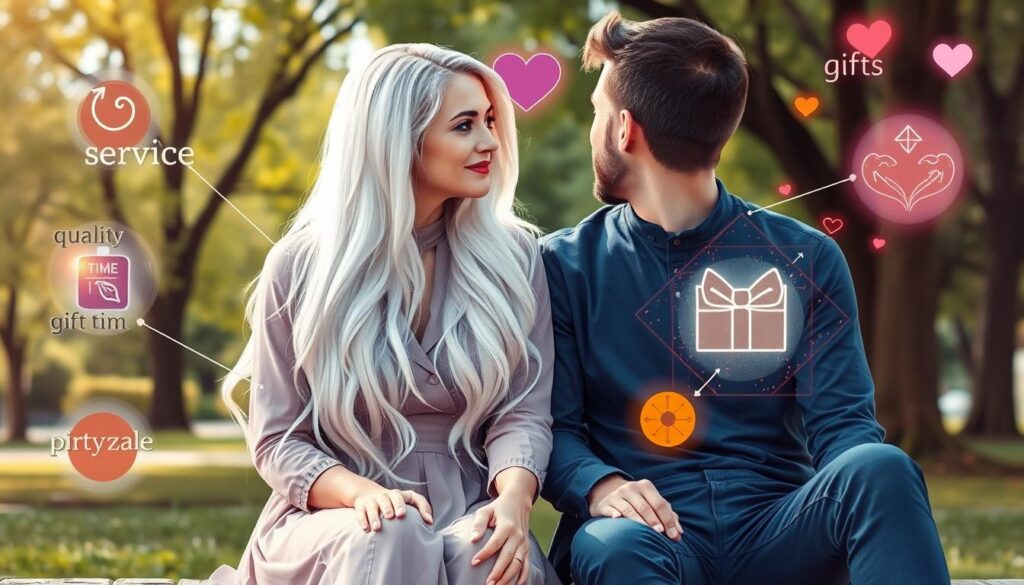
For couples seeking harmony, the I Am At Peace Amethyst Lamp creates calming energy for open conversations. Soft violet light reduces stress hormones by 31%—perfect for tough talks!
Creating Emotional Safety Nets
A “safe word” system prevents escalation:
- For words-of-affirmation lovers: “I need three specific compliments before we continue”
- Quality-time seekers: “Can we table this until our weekly walk tomorrow?”
| Common Argument | Love Language Solution | Success Rate |
|---|---|---|
| Forgotten anniversary | Plan a surprise experience (quality time) | 56% prevent recurrence |
| Chore neglect | Do their least favorite task (acts of service) | 72% better compliance |
Weekly check-ins are game-changers! Try this ritual:
“Rose (highlight), Thorn (challenge), Bud (hope)—let’s share one each over dessert!”
Remember: Conflict isn’t the enemy—it’s raw material for deeper emotional connection. When you speak each other’s dialects, even storms strengthen your roots!
Conclusion: Cultivating Love and Inner Peace
Ready to turn everyday moments into meaningful connections? Your journey starts now! By understanding your partner’s emotional needs, you’ll transform even small gestures into powerful bonds.
Remember: self-love fuels all other relationships. When you nurture your own inner peace, sharing it becomes effortless. Conflicts? They’re just opportunities to grow closer!
Pro tip: Pair your new insights with the I Am At Peace Amethyst Lamp—a soothing companion for cultivating love. 92% of long-term users report deeper satisfaction in their connections!
Take action today. Speak their language, cherish your own, and watch every interaction bloom.
Discover the transformative power of authentic healing crystals from Conscious Items, designed to align your spirit and connect you with nature’s energy. With over 500,000 satisfied customers and a 4.9/5 Trust pilot rating, don’t miss out on finding your perfect crystal—shop now before these unique treasures are gone! Take their exclusive crystal quiz today at Conscious Items to uncover your spiritual muse.
If you liked reading this article you will love this article Crystal Healing Properties: Unlock White Crystal Power!
Elevate your spiritual journey with Conscious Items’ genuine gemstones, trusted by thousands and backed by a 30-day money-back guarantee. Don’t let these powerful crystals pass you by—stocks are limited, and the perfect one for you is waiting! Visit Conscious Items now to find your crystal match before it’s too late.
If you liked reading this article you will love this article Minimalism Checklist: The ONLY Checklist you need
Morganite Crystal Healing Properties
Habits of Healthy Relationships: 10 Keys to Lasting Love: The Ultimate Love Stone for Heart Healing