
Can a single pair of barefoot shoes really change how you move and feel all day? I ask that because I tested each pick myself! I wanted real answers, not hype.
Here’s the short version: we found seven models that deliver on comfort, style, and ground feel. I checked fit, price, and real-world performance during training and everyday use. You’ll get straight talk and honest reviews based on hands-on testing.
Why it matters: a natural foot-shaped design and a wide toe box help toes splay and support better mechanics. Aim for about a thumb’s width in the toe box so your gait can breathe as your foot expands.
What you’ll learn: which shoe fits which goal—lifting, running, walking, or casual wear—plus notes on leather options, stack feel, and grip. Get the facts so you can pick the best barefoot shoes without guesswork!
Key Takeaways
- You’ll see seven tested picks that balance comfort, style, and movement.
- Hands-on reviews explain fit, price, and when a leather option shines.
- A thumb’s width in the toe box improves toe splay and gait.
- We compare stack feel, grip, and flexibility in plain terms.
- Find the right model for lifting, running, or daily footwear needs.
Why Minimalist Shoes Are Trending Right Now
A simple design shift is changing how we move: wide toe profiles and zero drop feel different, and people love it!
Comfort meets foot-shaped design: foot-shaped uppers and a wide toe box let your big toe anchor balance and power. Anya’s Reviews notes these designs reduce bunion risk, and flexible soles improve movement and balance.
From gym floors to city streets, barefoot footwear shines in many settings. You get agility in training, and easy comfort for daily walks and errands. Leather uppers can dress up an outfit, while knit versions stay light and breathable.
“Foot-shaped designs reduce bunion risk, flexible soles aid movement and balance, and true zero drop supports posture.” — Anya’s Reviews
Quick comparisons:
| Benefit | Where it helps | Tip |
|---|---|---|
| Wide toe fit | Lifting, walking, running | Try extra wide if you have high-volume feet |
| Zero drop | Posture and gait | Transition slowly to avoid fatigue |
| Flexible sole | Balance and agility | Compare price and materials like leather or knit |
- Look at reviews to judge fit foot and long-term comfort.
- Primal Zen and other models show leather can be both stylish and practical.
- You’ll find barefoot sneakers that work across the day without extra bulk!
Editor’s Top Picks at a Glance
I tested every pair and boiled results down to a quick guide so you can pick the right pair fast! This snapshot pairs each shoe with the use case where it shines. Read the short notes, then check price and fit for your needs.
- Best for lifting: Tolos Archetype 2.0 — awesome grip and ground feel for squats and deadlifts with flexible articulation.
- Best for CrossFit: Vivobarefoot Motus Strength — TPU overlays, rope-climb durability, and aggressive lugs for varied WODs.
- Best for running/hybrid: Xero Shoes Zelen — tire-like tread, breezy upper, and durable design for mixed sessions.
- Top for women: Vivobarefoot Primus Lite Knit — sleek knit comfort for daily wear and gym days.
- Top for men: Inov8 Bare XF — wide platform, grippy outsole, and BOOMERANG insole cushion for HIIT and short runs.
- Favorite for beginners: AIRHAS Knit — low price, a touch more cushion while you adjust, and reliable gym performance.
- Best for walking/daily: Icarus Ascent Gen 2 — dress-up friendly look with insole options and commute-ready grip.
Quick tip: check price and fit first. These picks came from hands-on reviews and real use, so you know they perform!
| Use Case | Model | Key Feature | Why Pick It |
|---|---|---|---|
| Lifting | Tolos Archetype 2.0 | Grip & articulation | Stable for heavy squats and deadlifts |
| CrossFit | Vivobarefoot Motus Strength | TPU overlays, lugs | Durable for rope climbs and mixed WODs |
| Running / Hybrid | Xero Shoes Zelen | Tire-like tread | Versatile traction for road and gym |
| Daily / Walking | Icarus Ascent Gen 2 | Dress-friendly sole | Commute-ready comfort and style |
Tolos Archetype 2.0 — Best for Lifting
Ready to lift heavier with clearer feedback from the floor? The Tolos Archetype 2.0 is built for squats and deadlifts and it shows! You’ll feel locked to rubber and wood thanks to aggressive grip and a flexible forefoot that lets your toes articulate naturally.
Ground feel & grip: excellent on platforms, with a low, stable platform that improves bar path awareness. The forefoot moves with your toe flexion, so lunges and single-leg work feel solid and responsive.
Fit notes: the Archetype runs true size for most feet. If you have wider feet or high volume feet, thinner socks help free pinky-toe space. Sizing matches Xero Shoes and Inov8, so your usual size is a safe bet.
Stack, insole, and toe box details
The stack height is low and stable, giving clear ground feedback. The shoe ships with a fixed insole, so there’s no removable tray. The toe box is foot-shaped but not ultra-boxy — great for many lifters, but compare fit if you need maximum outer-toe room.
| Feature | How it helps | Quick note |
|---|---|---|
| Grip & articulation | Secure foot placement on wood/rubber | Excellent for deadlifts and squats |
| Fit parity | Matches Xero Shoes & Inov8 sizing | True size works for most |
| Insole & stack height | Fixed insole, low platform | Simple, consistent underfoot feel |
“A do-it-all trainer that keeps lift mechanics crisp.”
- Check price and colorway — white can look slightly tinted in some lights.
- Real-world reviews praise its lifting focus while noting modest pinky-toe room for very wide feet.
Vivobarefoot Motus Strength — Best for CrossFit
For athletes who mix lifting, rope climbs, and sprint work, this model brings rugged, competition-ready performance. I love how it feels locked and deliberate underfoot!
Durable upper: TPU overlays protect the toe box and wrap the sole, so burpees and rope climbs don’t shred the material. The built-up upper runs warm, but it holds up through heavy WODs.
Lugged outsole & grip: Aggressive lugs bite turf, rubber, and platforms. Cleans and heavy deadlifts feel planted. Men and women report strong traction and less toe-cap wear than lighter trainers.
Fit guidance
Narrow feet often size down. Wider or flatter feet should pick true-to-size. The width is generous, and the roomy box helps toes spread—good if you need extra wide-friendly options.
Practical features
- Removable insole with a finished interior—easy to swap for your preferred cushion.
- Booty-style construction locks heel and midfoot for quick transitions.
- Real-user reviews praise stability on OHP and squats, which helps justify the higher price for serious training.
“A tough, competition-ready platform that bridges lifting, metcons, and calisthenics.”
| Feature | Benefit | Who it suits | Quick tip |
|---|---|---|---|
| TPU overlays & wraps | Rope and abrasion protection | CrossFit athletes | Wear socks to manage heat |
| Lugged outsole | Reliable traction on turf/rubber | Cleans, deadlifts, sprints | Great for mixed surfaces |
| Removable insole | Customize volume and cushion | Men & women who tweak fit | Swap for thinner insole if TTS feels tight |
| Booty construction | Secure midfoot and heel lock | Fast WOD transitions | Try half size down if narrow |
Xero Shoes Zelen — Top Pick for Running and Hybrid Training
Hit the road or the gym — the Zelen handles both with confident grip and airy comfort! I found it snappy on short sprints and steady miles. The tread mimics a tire pattern, so turns and quick moves stick without bulk.
Tire-like tread, breathable upper, and summer mileage
The outsole gives traction on pavement and turf. You feel planted but still light underfoot.
The upper breathes well. It’s perfect for hot runs and sockless days. That airy build also helps when you mix lifting with runs.
When to size up and who should consider HFS instead
Go true size if your feet are narrow or average. If you have wide feet or need extra toe room, size up half. High volume users can tweak lacing for top-of-foot comfort.
- The Zelen lines up with Tolos and Inov8 for relative sizing.
- Community notes say it runs smaller than some Vivo and Splay models — double-check before you buy.
- It’s a great barefoot shoe for warm-weather training and hybrid sessions.
| Feature | Benefit | Who it fits |
|---|---|---|
| Tire-like tread | Grip on sprints and turns | Road & gym runners |
| Breathable upper | Cool for summer miles | Hot-weather trainers |
| Low platform & wide fit | Natural stride and toe splay | Wide feet & hybrid users |
“A grippy, breathable hybrid that keeps your feet cool and close to the ground.”
Vivobarefoot Primus Lite Knit — Top Pick for Women
If you want a knit sneaker that doubles as a gym go-to and a cafe-ready shoe, meet the Primus Lite Knit! It gives you sock-like comfort and a clean look that dresses up athleisure fast.
Knit comfort for daily wear and lifting days
The breathable knit upper feels light all day. You get low, connected ground feedback from the 4mm Active Sole. It’s great for lifting and mobility work!
Active sole feel, lengthwise fit, and ankle opening feedback
The shoe runs long. Narrower feet often size down; wider or flatter feet choose true-to-size for best fit.
Some users note a snug ankle opening at first. Break-in helps, and socks ease the fit while you adjust.
“Durable and balanced — a go-to for women who want gym performance and daily style.”
| Feature | Benefit | Who it suits |
|---|---|---|
| Breathable knit upper | All-day comfort and warm-weather use | Women seeking daily wear and light training |
| 4mm Active Sole (stack height) | Low, connected ground feel | Lifters and mobility-focused athletes |
| Runs long; snug ankle opening | Consider sizing and break-in | Narrow feet size down; wide feet TTS |
- Price reflects premium build; many women say it’s worth it.
- The toe box is roomy but tapered—check outer-toe space if you’re extra wide.
- For explosive plyos or wide sumo pulls, pick a model with stronger lockdown.
Inov8 Bare XF — Top Pick for Men
If you want a roomy, stable trainer that still feels close to the ground, the Bare XF stands out! I love how it widens the platform compared to the 210 V3 and gives your toes space to splay.
BOOMERANG insole cushion for HIIT and short runs
The BOOMERANG insole adds just enough extra cushion for jumps, sprints, and short runs. You keep ground feel while enjoying comfort during high-impact sets.
Outsole grip on wood, turf, and rubber gym floors
The outsole grips wood platforms, rubber floors, and turf with confidence. That traction helps on sled pushes, deadlifts, and quick transitions.
Fit notes: go true size for most men. If you’re 2E+ consider a half size up. Fit lines up well with Xero Shoes and Tolos, so your usual size often works.
- Wider platform for stability and toe splay.
- Grippy outsole for gym surfaces and mixed training.
- BOOMERANG gives extra cushion without killing barefoot feel.
- Daily wear and travel-friendly — many reviews praise its versatility.
| Feature | Benefit | Who it fits | Quick tip |
|---|---|---|---|
| Wider platform vs 210 V3 | Stable base for lifts and balance | Men wanting toe splay and control | Choose your typical size unless 2E+ |
| BOOMERANG insole | Extra cushion for HIIT and short runs | Cross-trainers and commuters | Remove or swap if you want lower volume |
| Grippy outsole | Traction on wood, turf, rubber | Gym users and sled athletes | Great for mixed-surface workouts |
| Breathable upper & durable build | Comfort all day and long sessions | Travelers and daily wearers | Price reflects quality — check current price |
“A true one-shoe travel solution — gym, errands, and casual all in one.”
AIRHAS Knit Barefoot Shoe — Favorite Option for Beginners
If you’re new to barefoot footwear, AIRHAS is the low-risk pick that surprised me the most! At roughly $40, it gives real entry-level value so you can try the feel without a big outlay.
Low cost, higher stack comfort while you acclimate: the slightly higher stack adds an extra cushion layer that eases the transition. That makes early sessions feel friendlier on sore calves and arches.
Training performance vs. daily wear value
The knit upper breathes and holds the foot snugly. Grip from the rubber outsole is solid for squats, deadlifts, and machines. The included insole is fixed, which keeps things simple for first timers.
Fit is forgiving for most foot shapes, including those with high volume. Lacing helps dial in top-of-foot comfort. For many beginners, this means fewer sizing headaches!
- You get a clear price advantage to test the barefoot concept.
- Good grip and structure for beginner strength work.
- Comfortable for daily walks and errands — great overall value.
“At about forty bucks, AIRHAS is a smart, low-risk way to try barefoot sneakers and see how your feet adapt.”
| Feature | Why it matters | Quick note |
|---|---|---|
| Price | Low barrier to entry | ~$40 — budget-friendly |
| Stack height | Gentle acclimation | Extra cushion for newbies |
| Fit | Forgiving for high volume feet | Lacing tunes top comfort |
Final take: AIRHAS is a practical first shoe if you want to test barefoot training. Reviews from beginners praise the value. Try them regularly and you’ll feel your feet get stronger — while your wallet stays happy!
Icarus Ascent Gen 2 — Best for Walking and Daily Wear
If you want one pair that switches from work to walks with no fuss, the Ascent Gen 2 nails it! It looks sharp and still keeps a natural, barefoot feel for long days on your feet.
Dress-up versatility with multiple insole options
The Ascent Gen 2 ships with three insoles so you can fine-tune cushion and volume fast. Swap between thin and thicker layers to suit meetings, travel, or long strolls.
Removable insole options let you dial in feel without guessing. That makes sizing and comfort simple for women and men alike!
Herringbone tread and commute-ready grip
The sole uses a herringbone pattern that grips damp platforms and slick sidewalks. You’ll feel steadier on subway steps and rainy walks. It’s a smart commuter pick.
- Leather finish elevates the look while staying flexible and light.
- Real-world reviews praise build quality and helpful customer service.
- Fit is accommodating; the insole choices help extra wide feet tune volume.
- Pair it easily with other brands (even Xero Shoes) thanks to clear sizing cues.
- Price sits in the mid range, and many buyers say the value matches the quality.
“A sleek, versatile daily driver that moves from coffee meetings to post-work walks without fuss.”
| Feature | Why it matters | Quick note |
|---|---|---|
| Three insole options | Customize cushion and stack height | Swap for thinner or thicker feel |
| Herringbone tread | Commute-ready traction | Works well on damp city surfaces |
| Leather finish | Dress-friendly look | Still flexible and lightweight |
Want one shoe that handles travel, errands, and work? The Ascent Gen 2 is a confident pick—smart, comfy, and easy to live in. Check price and read a few recent reviews to confirm sizing for your feet!
Minimalist Shoes
Want a pair that handles errands, travel, and a short gym session? Read this quick guide! I’ll keep it practical and upbeat so you can choose fast.
Think of this as your hub for everyday barefoot options. Brands like Lems (the Primal Zen Suede gets high marks for comfort), Xero casuals, and budget-friendly Whitin all show up in real-world reviews.
Many makers now offer two widths, removable insoles, and leather or waterproof barefoot finishes. That means you can pick a wide fit or extra wide last if you have wider feet or high volume feet.
- Style + movement: barefoot sneakers dress easily for work and still feel natural for training.
- Price matters: compare price, fit, and warranty to match your priorities.
- Adaptation tip: start with a slightly cushioned model, then rotate to thinner soles as you adapt.
“Look at reviews to match price with durability — that’s how you find the best barefoot option for daily life.”
How to Choose: Toe Box, Stack Height, Volume, and Insole Options
Picking the right pair starts with your foot, not the hype!Find a match for your toe shape, volume, and daily needs and you’ll feel the difference every step.
Wide toe box vs. boxy forefeet: Choose a toe box that matches your foot shape. A wide toe box frees your big toe to align straight and stabilize each step. Boxy forefeet often fit box designs best. If your big toe is the longest, tapered shapes can still work—just try them on and check for pressure at the outer edge.
Stack height and ground feel: Thin stacks give the truest ground feedback and help posture. Thicker stacks add comfort and forgiveness for long walks or transitions. Aim for a balance that supports your activities and lets you feel the ground enough to adapt your stride.
High volume feet vs. low volume feet: High volume feet benefit from looser lacing and a removable insole to reduce pressure. Low volume feet can use tongue pads or a thin extra insole to prevent slipping. Removable insole setups are golden — they let you tweak volume and cushion on the fly.
Leather, knit, or vegan uppers: Leather holds shape and dresses up well; leather barefoot options often cost more but last. Knit breathes best for hot days and sockless wear. Vegan synthetics give a sleek look and easy care. Consider price against materials: premium leather and finished interiors usually outlast cheaper builds.
“Start with about a thumb’s width at the front so toes can spread — your feet may expand slightly as you wear barefoot styles.”
- Fit tip: Try models in your usual size; test toe splay and heel lock while standing.
- Price note: Balance cost with materials — a higher price often buys better leather or finish.
- Practical pick: For varied days, favor removable insoles and a roomy toe box for comfort and versatility.
Sizing & Fit Guide for Wider Feet, Extra Wide, and High Volume
Fit matters more than hype when your feet need extra room or volume—here’s how to dial it in. Start with practical checks so you can buy with confidence!
True size, size down, or half size up: brand-by-brand cues
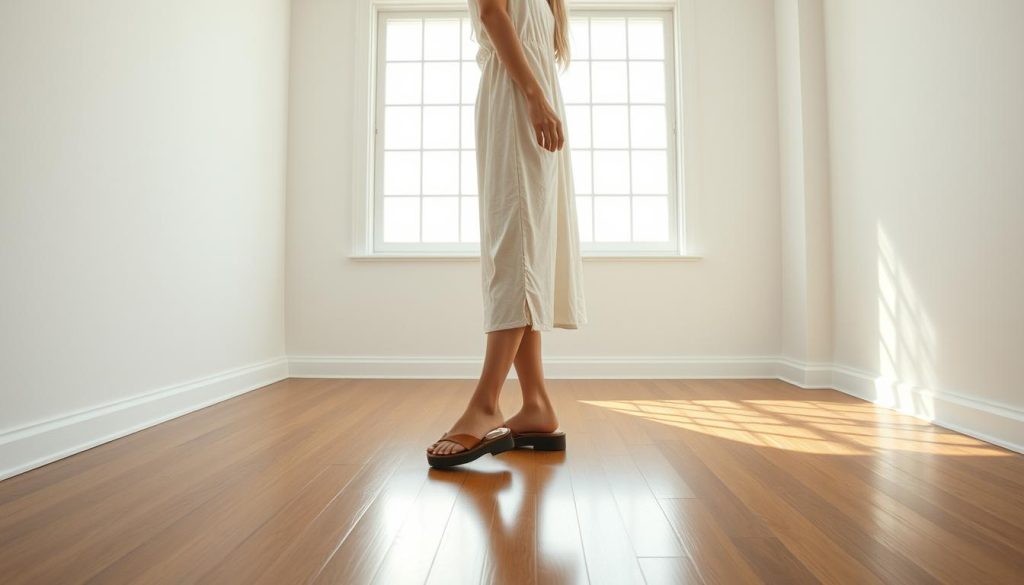
Begin with your true size and stand upright when checking length. Aim for about a thumb’s width in the front of the toe box to allow natural splay.
Tolos, Xero, and Inov8 share close sizing—so use your usual size there. The Primus Lite Knit often runs long, so consider half a size down if you’re between sizes. The Zelen can fit small; wide feet sometimes go a half-size up. The Motus Strength often works better sized down for narrow feet.
Without socks vs. with socks: how to dial in toe box room
If you train without socks, you gain a touch of interior room. Wearing socks can cut friction and help snug a slightly loose heel. High volume feet can remove insoles and loosen laces to free space. Low volume or slim feet can add a thin insole or tongue pad for a locked-in feel!
- Extra wide feet: favor brands with broader lasts and square toe boxes.
- Volume feet: try removable insoles and read recent reviews for fit patterns.
- Price & return: check price and return policy before committing—try at home and walk indoors to confirm.
“Fit by volume matters as much as length—choose by your foot shape, not just the number.”
Transitioning Safely: From Cushioned Sneakers to Barefoot
Want barefoot benefits without nagging pain? Start with a gentle, measured approach. Your feet, ankles, and calves need time to adapt to new ground feedback.
Acclimation timeline: start slow to avoid fatigue
Begin with short sessions. Try 10–20 minutes in your new barefoot shoes, then switch back to your cushioned pair. Add 5–10 minutes each week as comfort improves.
Rotate shoes often. That lets tissues recover and reduces soreness. Reviews and That Fit Friend both stress: do not shift to full-time use immediately!
Exercises to strengthen arches and ankles
Do a few simple drills daily to build resilient support. Focus on foot mobility, calf strength, and balance.
- Foot drills: toe spreads, doming, and short barefoot walks at home.
- Calf raises: 3 sets of 10–15 slowly, both double- and single-leg.
- Balance holds: 30–60 seconds on one leg; add soft-surface challenges later.
- Ankle circles: warm up to improve range and stability.
“Slow acclimation avoids over-fatiguing ankles and feet—patience pays off.”
Make sure you keep stride relaxed and cadence steady while you adapt. If you want barefoot gains sooner, sprinkle barefoot time at home daily.
| Step | Duration | Why it helps |
|---|---|---|
| Short sessions | 10–20 min, 1–3x/day | Limits soreness, builds tolerance |
| Rotation | Alternate with cushioned pair | Allows tissue recovery |
| Strength drills | Daily, 5–15 min | Improves arch and ankle resilience |
| Progression | Weeks to months | Gradual time increase gives lasting results |
Price and reviews matter when choosing new barefoot shoes, but fit foot function first. Track progress, celebrate small wins, and if sharp pain appears, back off and rest. You’ll enjoy better movement when you give your body time!
Budget and Entry-Level Picks: Great Value Barefoot Sneakers
If you’re watching your wallet, there are wallet-friendly barefoot picks that still deliver real feel and function! I love pointing you to options that let you test the concept without a big spend.
Want big value? Start with Whitin, Splay, and AIRHAS to see what barefoot shoes feel like. Each has clear trade-offs, but they teach your feet fast.
Price ranges and trade-offs
Whitin looks mainstream and costs less. It’s great for casual wear, though seams can rub if you go sockless. Good for style and trying the concept.
Splay offers multiple affordable models that feel much better than narrow everyday shoes. Breathability and low cost are wins here.
AIRHAS surprised me in training. At about forty bucks, it gives a forgiving ride and decent fit for beginners.
- Try one budget pair and one mid-tier model to compare price, fit, and ground feel.
- Use socks and lacing to fix minor rubbing or volume issues.
- Step up later to options like Primal Zen or Xero Shoes if you want more durability.
“Budget picks let you learn what matters—then you can invest smarter.”
| Brand | Why Buy | Trade-off |
|---|---|---|
| Whitin | Low price, casual look | Seam rubs sockless |
| Splay | Affordable models, wide toe-friendly | Variable durability |
| AIRHAS | Good for training, ~ $40 | Less premium materials |
Spotlight Brands: Lems, Tadeevo, and More “True Barefoot” Options
Let’s spotlight two brands that take very different routes to natural foot feel—one cushy and casual, the other raw and ultra-light!
Lems Primal Zen Suede — casual comfort with a wider fit
Lems gives you the Primal Zen Suede: a leather upper with extra cushion and a roomy forefoot. It feels comfy for long days and still looks sharp.
The Primal Zen often runs small. I recommend sizing up half a size and using the removable insole to tune volume for high volume or extra wide feet.
Tadeevo — strip-back, true barefoot performance
Tadeevo goes all-in on zero drop and ultra-flexible soles. It’s feather-light, breathable, and wide where it counts for natural toe splay.
They promise quick shipping and a 30-day return window, so you can test the feel and decide if you want barefoot life!
- Fit tip: Lems for dressed-up leather comfort; Tadeevo for raw ground feel.
- Price: varies by material—compare longevity vs. initial cost.
- Compare: also try Xero Shoes to see which philosophy fits you best.
| Brand | Key trait | Why pick it |
|---|---|---|
| Lems (Primal Zen Suede) | Leather, cushioned | Daily comfort & style |
| Tadeevo | Zero drop, ultra-flex | True barefoot feedback |
| Xero Shoes | Hybrid options | Balance of feel and durability |
“Pick by fit and function — read a few recent reviews and decide what you want barefoot to feel like.”
Use Cases: Lifting, Cross-Training, Walking, and Trail
Match your main activity to one solid pair and watch how much simpler your week of training gets! Pick footwear that suits the surface and your goals. That keeps movement efficient and pain-free.

Gym floors and platforms: grip, stability, and toe splay
For lifting, choose a stable platform with solid grip and a roomy toe box so your stance stays powerful.
Look for: flat, low stack soles and wide toe fit for extra toe spread during heavy squats and deadlifts. That Fit Friend notes grip changes by surface—test on your gym floor!
Cross-training needs secure uppers and versatile traction. Motus Strength is a great example for durability during rope climbs and mixed metcons.
City miles and travel: leather barefoot and waterproof barefoot options
Walking and commuting reward comfort and smarter treads. Icarus Ascent’s herringbone pattern shines on slick platforms and rainy sidewalks.
Leather barefoot models dress up your look while keeping a natural stride. Anya’s Reviews also points out waterproof barefoot variants across brands for wet-weather days.
If you have wide feet or need extra wide fit, pick a last that matches your forefoot and tune lacing to dial in fit. Men and women both find hybrid pairs that run and lift well, saving you money and closet space!
- Lifting: stable platform, wide toe box, supreme grip.
- Cross-training: reinforced upper, versatile tread, secure lockdown.
- Walking/travel: cushioned comfort options, dressy leather, commute-ready tread.
- Wet weather: waterproof barefoot options keep ground feel without soaked socks.
| Use Case | Key Feature | Example |
|---|---|---|
| Lifting | Low stack, wide toe fit, platform grip | Tolos Archetype 2.0 |
| Cross-Training | Durable upper, multi-surface traction | Vivobarefoot Motus Strength |
| Walking / Travel | Herringbone tread, leather or extra insole options | Icarus Ascent Gen 2, Primal Zen |
| Hybrid running & gym | Breathable upper, tire-like tread | Xero Zelen |
“Start with the activity you do most. One versatile pair can cover gym, commute, and short runs—compare price and durability to choose wisely!”
Care, Durability, and Price: Make Your Pair Last Longer
A little routine care keeps your favorite barefoot pair looking and feeling new! Follow a few simple steps and you’ll get more miles and better value from every purchase.
Cleaning knit vs. leather
For knit uppers: clean gently with mild soap and lukewarm water. Dab or sponge—don’t scrub hard, or the knit can snag.
Air-dry away from direct sun and heat. That preserves shape and prevents glue breakdown.
For leather: wipe with a damp cloth and use a conditioner now and then. Avoid long soaks to keep the finish intact.
Brush out outsoles regularly so tread stays grippy and debris doesn’t speed wear.
Price ranges, warranties, and return policies to note
Compare price by uppers, tread design, and insole systems—higher-quality builds often outlast cheaper pairs. Read recent reviews for durability signals like frayed knits or peeling overlays.
Check return windows and warranties. Brands like Tadeevo offer fast shipping and a 30-day return policy, which helps if the fit or volume doesn’t match your feet.
A little care goes a long way—rotate pairs, store them cool, and you’ll stretch value and performance!
- Rotate pairs if you train daily to extend life.
- Extra wide users should inspect toe creases and sidewalls early.
- Store shoes away from heat and direct sun to protect materials.
| Care Task | Why it helps | Quick tip |
|---|---|---|
| Gentle wash (knit) | Prevents snags and odor | Mild soap, air-dry |
| Wipe & condition (leather) | Preserves finish and shape | Spot clean, condition monthly |
| Clear outsole debris | Keeps tread grippy longer | Use a stiff brush after outdoor use |
| Check returns & warranties | Protects your price and fit | Prefer 30-day return policies |
Conclusion
Now you can choose the right barefoot option for your main activities with confidence.
You’re ready to pick the best barefoot pair for lifting, running, CrossFit, daily wear, or travel! Use fit notes and recent reviews to lock in sizing and avoid surprises on day one.
Balance price with performance and style. One great barefoot shoe can cover most of your week. If you also like cushier casuals, try Primal Zen; if you run hot and fast, look at Zelen from Xero Shoes.
Mind the toe room, stack feel, and upper security. Women and men find solid fits. High volume feet benefit from insole swaps and lacing tweaks.
New barefoot shoes arrive often—watch for updates, pick your winner, and enjoy easier movement. You’ve got this!
Discover the transformative power of authentic healing crystals from Conscious Items, designed to align your spirit and connect you with nature’s energy. With over 500,000 satisfied customers and a 4.9/5 Trust pilot rating, don’t miss out on finding your perfect crystal—shop now before these unique treasures are gone! Take their exclusive crystal quiz today at Conscious Items to uncover your spiritual muse.
If you liked reading this article you will love this article Crystal Healing Properties: Unlock White Crystal Power!
Elevate your spiritual journey with Conscious Items’ genuine gemstones, trusted by thousands and backed by a 30-day money-back guarantee. Don’t let these powerful crystals pass you by—stocks are limited, and the perfect one for you is waiting! Visit Conscious Items now to find your crystal match before it’s too late.
If you liked reading this article you will love this article Minimalism Checklist: The ONLY Checklist you need
Morganite Crystal Healing Properties
Habits of Healthy Relationships: 10 Keys to Lasting Love: The Ultimate Love Stone for Heart Healing