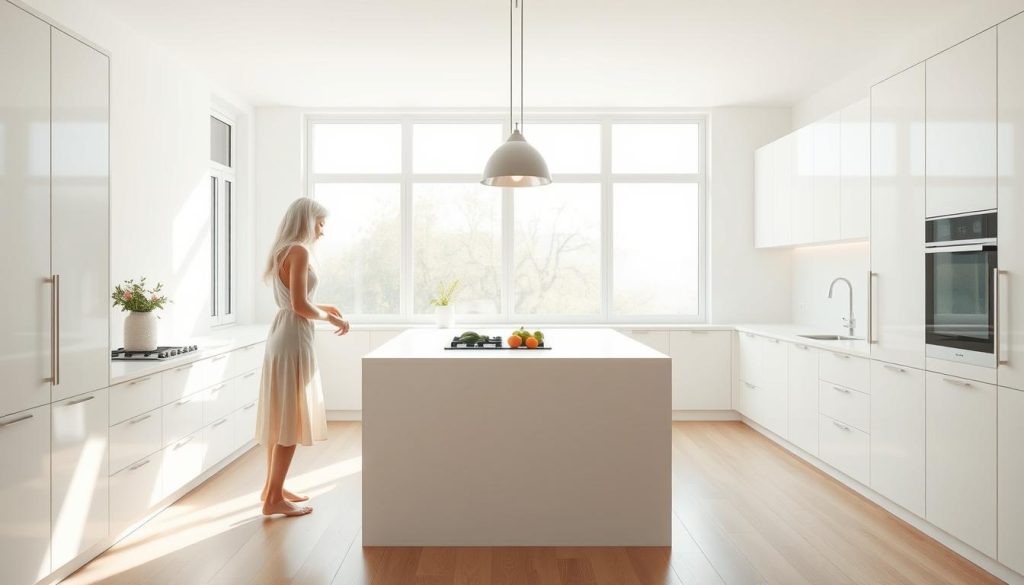
Want a kitchen that calms you the moment you step in? I’ve helped people reclaim their space and lower daily stress with a few smart moves, and you can too! This is about keeping only the items you actually use and making your cooking flow feel effortless.
Clear counters cut visual noise and free your mind. Cabinets, drawers, and the pantry act as friendly boundaries so everything has a home. We’ll work step by step to trim clutter and design a way that fits your real life!
Expect practical moves—store the toaster in a cabinet, tuck the blender on a lazy Susan, and keep the mixer on the pantry floor if that suits your space. Simplifying beats organizing more stuff; it makes your home feel bigger without a remodel!
Key Takeaways
- You’ll focus on a few essential items that make cooking fun and simple!
- Clearing counters reduces visual noise and eases your mind.
- Use cabinets and drawers as boundary lines so things stay put.
- Follow a clear step plan to trim stress and open your space.
- Design the system to fit your routines—not a one-size rule.
Start Here: What a Minimalist Kitchen Looks Like Today and Why It Reduces Stress
Picture a kitchen where every item earns its spot because you actually use it! This is personal. There’s no one-size list. You decide the rules based on how you cook and live.
Keep fewer things to gain more calm. When you limit items, you wash less, wipe less, and see less visual clutter on your counters. That clarity lowers stress fast.
We’ll also bust the convenience fallacy: leaving stuff out seems faster, but a quick put-away habit beats constant chaos. Your way matters — tailor storage to match how you really cook.
How this feels day to day
- Only keep what you reach for each week.
- Fewer tools mean fewer dishes and less cleanup.
- Clear counter space equals an easier, calmer routine.
| Habit | Action | Benefit |
|---|---|---|
| Weekly edit | Remove items you didn’t use | More space; fewer decisions |
| Quick put-away | Store daily items after use | Less visual noise; lower stress |
| Tailor storage | Match zones to your cooking style | Faster find-and-return; effortless cleanup |
Audit and Simplify: The First Step to a Clutter‑Free, Functional Kitchen
Begin by asking: which items help you cook most days? That single question makes the audit fast and kind. You don’t need a complete overhaul—just honest choices.
Stay in your lane: keep tools that match the kind of chef you are, not the one you imagine. If you make simple weeknight meals, keep the essential pans, knives, and a set of mixing bowls that actually get used.
Consolidate duplicates
Line up spatulas, whisks, knives, and mixing bowls. Choose the best few and release the rest. Consolidating saves space and makes your routine faster.
Borrow before you buy
If you’ve never used a gadget, borrow it! Test it, then decide. This avoids future clutter and keeps your cabinets from overflowing with single‑use tools.
Let go of excess bakeware
Specialty pans and rare-use items are often the first to go. Say goodbye to things that sit idle and watch your workflow improve.
“One clear step at a time—keep only the items that earn their space by helping you cook better, faster, happier.”
- Start with a no-judgment audit: are you the chef you are or the one you wished to be?
- Pick tools with multiple uses and ditch single‑purpose gadgets.
- Ask: which item pulls its weight each week?
| Action | What to keep | Result |
|---|---|---|
| Audit drawers | Pans, knives, 2–4 mixing bowls | Smoother cooking; fewer decisions |
| Borrow/test | Specialty gadget | Save money; avoid clutter |
| Donate extras | Duplicate spatulas, whisks, single‑use bakeware | Cabinets open easily; better workflow |
One simple step: pick one shelf or drawer today. Edit it, keep what helps, and get rid of the rest. You’ll feel the difference instantly!
Set Boundary Lines: Use Cabinets, Drawers, and Pantry as Your Guardrails
Set clear limits in your space and you’ll make decisions faster every day. Treat cabinets, drawers, and the pantry as firm guardrails. They tell you how many items truly belong.
Think like a one‑car garage: you wouldn’t force two cars into one spot. Don’t cram tools or small appliances into spaces that can’t hold them. Embrace the limit and edit when a zone fills up.
Drawer and cabinet zoning
Create simple zones so everything has a clear way home. One drawer for utensils. One shelf for lids. One area for everyday dishes. This reduces guesswork and keeps counters clear.
- Boundaries help you choose: cabinets show how many items fit.
- Label shelves or dividers if that speeds returns.
- Store frequent-use pieces in prime spots; move rare tools higher or deeper.
| Zone | Keep here | Why it works |
|---|---|---|
| Utensil drawer | Spatula, spoons, tongs | Fast reach; fewer decisions |
| Plate shelf | Everyday plates and bowls | Consistent place for daily use |
| Lid rack | Pan lids and trays | Neat stacking; easier matches |
“Boundaries keep systems simple — when space signals full, edit instead of buying more.”
Clear Counters, Clear Mind: A Countertop Policy You’ll Actually Keep
Start a simple rule: if it doesn’t earn its spot, it doesn’t stay on the counter. This makes decisions fast and keeps your day calmer!
The convenience fallacy tricks us into thinking leaving items out saves time. In truth, quick put-aways cut chaos. When you clear surfaces, you cut visual noise and make the space feel ready to use.
The convenience fallacy: why “out on the counter” isn’t saving you time
Leaving everything out creates constant clutter that drains energy at home. A short reset after use takes less time than living with mess all day. Decide one way and stick to it—fewer exceptions, more calm!
What stays out vs. what gets stored
Keep out: your coffee maker if you brew daily, a knife block, and a neat paper towel holder. Those items truly earn prime real estate.
- Put the toaster in a cabinet—easy to grab, easy to hide.
- Slide the blender into a lazy Susan for fast access without visual bulk.
- Park the mixer on the pantry floor so counters stay open.
“Only what earns its spot stays out—everything else goes away after use.”
| Item | Keep out? | Where to store |
|---|---|---|
| Coffee maker | Yes, if daily | Counter or appliance garage |
| Toaster | No | Cabinet |
| Blender | No | Lazy Susan |
Quick wins: pick three items to remove today. Watch how fast cleaning becomes when there’s nothing extra to move. Your kitchen will feel more welcoming and ready for life!
Right‑Size Your Daily Dishes and Utensils to Cut the Pile
Give each person a small, consistent set of dishes and the sink stays tidy all week. This is a tiny change with a huge payoff! Use the rule of three per person for plates, cups, mugs, and bowls. Extras live in a cabinet for guests.
Rule of three (or four) works: choose three items for daily use. That amount stops buildup and makes washing simple. Handwash or wash-as-you-go to keep the pile small throughout day.
Adopt the rule of three or four
Practical step: set three plates, three cups, two mugs, and three bowls per person. Store extras away. This matches family size and keeps cabinets tidy.
Kid drawer sanity
Create a kid‑friendly drawer with one favored cup—think a Munchkin 360—and a couple of snack bowls. Fewer items mean easier washing and fewer lost pieces. Kids learn tidy habits fast when choices are limited!
“Limit the amount to what you need each day and cleanup becomes a quick, repeatable step.”
- Limit daily dishes: three or four per person is a game changer.
- Store extras for company so the sink doesn’t overflow.
- Match quantities to family size to make cleanups predictable.
| Action | What to keep | Result |
|---|---|---|
| Right‑size sets | 3–4 plates, cups, mugs, bowls per person | Less washing; clear counters |
| Kid drawer | One favorite cup, 2 snack bowls | Easy wash and return |
| Store extras | Guest dishes in high cabinet | Sink stays manageable |
Appliances and Tools: Keep the Workhorses, Store or Ditch the Rest
Your best cooking comes from a few reliable workhorses, not a crowded shelf of gadgets! Pick the appliances that truly help you and quietly store or get rid of the rest.
Start with a quick list: note what you use weekly. If a device hasn’t helped in months, consider donating it or moving it to long‑term storage.
Keep the blender handy in a lazy Susan for fast access without living on the counter. Choose a tight core of cookware: one set of stainless steel pots pans, two cast iron pans, one strainer, and a set of stainless steel mixing bowls.
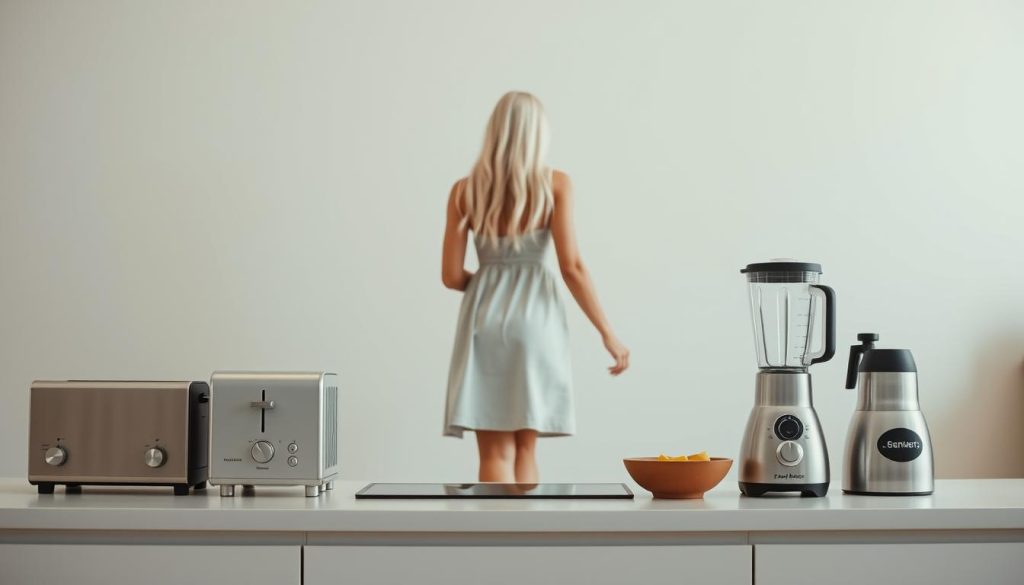
- Identify true workhorse appliances and free your shelves by removing extras.
- Favor multi‑tasking tools over one‑trick gadgets so every item earns its keep.
- Edit your utensil and utensils sets to what you grab each week—simple wins every time.
Quick rule: if an item doesn’t make cooking faster or easier, it’s time to reassess. This curated lineup makes the whole kitchen feel lighter and your routine smoother!
“Only keep gear that helps you cook better—everything else is weighing you down.”
| Keep | Store | Donate / Get rid |
|---|---|---|
| Stainless steel pots pans, cast iron | Seasonal appliances | Single‑use gadgets |
| Blender on lazy Susan, strainer, mixing bowls | Rarely used bakeware | Broken or duplicate items |
| Multi‑use utensils | Appliances that work but are seldom used | Appliances unused for months |
Smart Storage Swaps and Setups for Everyday Ease
Small swaps make your cooking flow faster and your shelves calmer! These moves save time and free up space so you can enjoy cooking more.
From plastic to glass for leftovers and lunches
Swap plastic for glass. Pyrex containers and Mason jars are clear, durable, and fridge‑friendly. They stack neatly and last longer.
Pro tip: keep lids in a shallow drawer beneath the jars. Matching lids is instant and your prep stays smooth.
Core cookware that does the heavy lifting
Keep cookware simple: stainless steel pots and pans, two cast iron skillets, and one trusty strainer. Fewer pieces mean faster decision making and better storage.
Group bowls and mixing bowls near your prep zone so you reach less and cook more happily!
Hideaway strategy for small appliances
Hide the toaster in a cabinet, tuck the blender on a lazy Susan, and park the mixer low on the pantry floor. These steps clear the counter and cut visual clutter!
Store your coffee maker where it’s easy to use if it’s daily — otherwise stash it away.
Utensil drawer over countertop canisters
Move utensils into a drawer to instantly reduce counter noise and make wiping surfaces fast. Use slim bins and risers to take advantage of vertical space.
“Little upgrades add up — smart storage makes your cooking calm and joyful.”
| Item | Where to store | Why it works |
|---|---|---|
| Pyrex & Mason jars + lids | Pantry shelf; lids in drawer | Clear view; fast matching; durable |
| Stainless pots, cast iron, strainer | Lower cabinet near stove | Easy reach; fewer pieces, more function |
| Toaster / Blender / Mixer | Toaster in cabinet; blender on lazy Susan; mixer on pantry floor | Clears counter; keeps appliances handy |
| Utensils, bowls, mixing bowls | Drawer near prep zone; stack bowls vertically | Less counter clutter; smoother workflow |
End each day with a tiny routine that makes mornings effortless and bright! A short, repeatable reset sets your home up for success and keeps clutter from creeping back in.

The nightly clean sweep
Lock in one quick step: do the dishes, unload the dishwasher, wipe counters, and sweep floors. This short ritual makes the next day feel calm and ready.
Assign roles so everyone helps
If you eat, you have a job. Give simple tasks to each family member: clear the landing strip, take out trash, stash lunch boxes, or do a two‑minute counter wipe.
Post the routine where everyone sees it. Small, clear roles keep the system humming without one person managing it all!
Use throughout day: wash as you go
Wash as you go throughout day to stop a big pile of dishes. Little cleanups are faster and keep the sink clear.
“A two‑minute counter wipe at night pays you back in a calm morning.”
- Fast nightly reset: dishes, unload dishwasher, wipe counters, sweep floors.
- Share the load: assign family jobs so the home runs smoothly.
- Daily habit: wash as you go to keep dishes manageable.
| Step | Who | Why it works |
|---|---|---|
| Do dishes / load dishwasher | Any household member | Keeps sink clear; reduces morning chores |
| Unload dishwasher | Rotate family member | Restocks cabinets; prevents pileups |
| Clear landing strip & trash | Kid or partner | Tiny tasks stop clutter from spreading |
Aim for “good enough” over perfect. Consistency beats perfection and keeps your kitchen light, breezy, and ready for life—every day!
Conclusion
,
Simple systems, repeated daily, give you more time and less stress for the things you love! Focus on three principles: simplify, protect boundary lines like cabinets and drawers, and keep counters clear.
Keep only the items you actually use. Right‑size sets of dishes, bowls, cups, and mugs. Store extras in a high cabinet for guests.
Choose a lean set of cookware — stainless steel pots pans and a couple of cast iron pieces. Park the toaster in a cabinet, tuck the blender on a lazy Susan, and place the mixer on the pantry floor.
End each day with a quick reset: dishes, light dishwasher duty, and a two‑minute wipe. Stick with this and your minimalist kitchen will feel calm, useful, and ready for life!
Discover the transformative power of authentic healing crystals from Conscious Items, designed to align your spirit and connect you with nature’s energy. With over 500,000 satisfied customers and a 4.9/5 Trust pilot rating, don’t miss out on finding your perfect crystal—shop now before these unique treasures are gone! Take their exclusive crystal quiz today at Conscious Items to uncover your spiritual muse.
If you liked reading this article you will love this article Crystal Healing Properties: Unlock White Crystal Power!
Elevate your spiritual journey with Conscious Items’ genuine gemstones, trusted by thousands and backed by a 30-day money-back guarantee. Don’t let these powerful crystals pass you by—stocks are limited, and the perfect one for you is waiting! Visit Conscious Items now to find your crystal match before it’s too late.
If you liked reading this article you will love this article Minimalism Checklist: The ONLY Checklist you need
Morganite Crystal Healing Properties
Habits of Healthy Relationships: 10 Keys to Lasting Love: The Ultimate Love Stone for Heart Healing