
Ready to reclaim your time and energy this week? What if the way to a calmer life is one small choice a day?
You’re here to make space for what matters! I’ll show you a clear, upbeat path to start this week and keep momentum. This approach focuses on minimizing distractions so you can do what matters most, not on a magic number of things.
We’ll start small. Remove one unnecessary item today. Stop bringing in new purchases tomorrow. These tiny wins build a decision-making muscle that lasts.
The benefits are real: less stress, more time, and room for people and projects you love. This is a flexible lifestyle you shape to fit your goals. Expect simple systems, quick wins, and a calm space by day seven!
Key Takeaways
- Start with one small step each day to build momentum.
- Use minimalism as a decision filter to save time and energy.
- Focus on relationships and meaningful work, not stuff.
- Quick wins lower stress and free up space in your life.
- This method is flexible—adapt it to your lifestyle and goal!
What Is Minimalism? From Art Movement to Simple Living Lifestyle
A bold art shift in New York sparked a wider move toward clear, calm living! It began in the early 1960s as a reaction to Abstract Expressionism. Artists stripped objects of extra meaning and trusted pure form.
Key creators like Donald Judd, Agnes Martin, Dan Flavin, Carl Andre, Robert Morris, Anne Truitt, and Frank Stella used geometric shapes and factory materials. In architecture, Ludwig Mies van der Rohe’s “Less is more” guided design toward essential parts and neutral tones.
The influence reached beyond galleries. Japanese Zen ideas—wabi-sabi and ma—encouraged empty space and calm tones. Composers such as La Monte Young, Terry Riley, Steve Reich, and Philip Glass used repetition to build flow.
Over time, the movement broadened into everyday life. You’ll see how simple elements and high quality beat trendy excess. This idea shows the real difference between an art movement and your personal, minimalist practice!
- Art roots: clean lines and repetition.
- Design principle: focus on essentials.
- Everyday use: minimalism also fits homes and routines.
The Benefits of Minimalism for Your Life Today
Clearing out the extras gives you instant breathing room and a calmer day! This change shows up fast in how you feel and how you spend your hours.
Reduce stress by removing physical and mental clutter
Reduce stress by removing physical and mental clutter
Clutter creates a running to-do list in your sight. When you clear surfaces and screens, you drop that noise and lower anxiety.
Reclaim time and energy for people and projects that matter
You’ll spend less time cleaning, fixing, and searching. That means more time for friends, hobbies, and focused work!
Energy follows focus—less managing of stuff equals more real energy for what you love.
Financial clarity: spending on quality over quantity
Intentional spending helps your money go further. Choosing quality over quick buys supports long-term goals and reduces repeat purchases.
| Area | What improves | Quick result | Why it matters |
|---|---|---|---|
| Mental | Less visual noise | Lower stress | Better focus for work and people |
| Time | Less upkeep | More free hours | Choose what fills you |
| Money | Clearer spending | Fewer impulse buys | Build savings and value |
| Life | Calmer home | Everyday ease | Show up better for others |
- You’ll feel the stress lift as you remove clutter from surfaces and schedules.
- You’ll reclaim time for people and projects that light you up.
- Your money will fund quality, not quantity, so your life feels richer.
Small steps add up fast. This is a simple way to free time, boost energy, and make daily life lighter!
Minimalism
Treat this as a practical tool you can shape to fit your life and goals! It’s not a rulebook or a contest. It’s a simple way to cut distractions so you can focus on what matters.
You don’t need a certain number of things to start. Whether you live in a studio or a large house, this lifestyle adapts to your space and season of life. No perfect conditions required!
- Use the idea as a daily compass: “Does this support the life I want?”
- You can call minimalist or not — results matter more than labels.
- Start small, stay curious, and keep going — progress beats perfection!
- Owning fewer often brings more freedom, clarity, and joy.
- You’ll reduce distractions and show up fully for what counts.
“Make this your tool — tailored, simple, and kind to your routine.”
Bottom line: minimalism is flexible, practical, and made by you. Try one small edit today and notice how much clearer your choices feel!
Your 7-Day Beginner’s Guide: A Simple Living Action Plan
Begin by writing down a single reason you want change—this becomes your north star! Use that goal when choices get fuzzy. This short plan breaks the process into tiny wins you can keep up all week.
Day One: Define your why and set a clear goal
Write your why. Reduce anxiety, spend more time with family, or save for debt—pick one clear goal!
Keep it visible. Put the goal where you’ll see it each morning to fuel action.
Day Two: Create one clutter-free zone at home
Choose a small area like a nightstand or kitchen counter. Protect it and let that clean space inspire the rest of your rooms.
Day Three: Declutter duplicates and obvious extras
Gather extra items—duplicate measuring cups, spare linens, and similar pieces. Box them for 30 days and donate what you don’t miss.
Day Four: Stop the influx—set buying boundaries
Log out of shopping apps, set simple buying rules, and avoid aspirational purchases. This keeps your gains from being erased by new stuff.
Day Five: Try a mini digital detox for focus
Turn off nonessential notifications. Tidy your inbox and limit social scroll time to reclaim attention and reduce digital clutter.
Day Six: Simplify meals and daily routines
Repeat breakfasts and lunches. Rotate two to three dinners to save time and money. Small menu limits free up daily decision energy.
Day Seven: Reflect, adjust, and plan your next sprint
Review what worked and tweak your systems. Set a fresh goal for the next seven-day project and keep the order simple.
- One thing each day builds your confidence without overwhelm.
- Expect more time and more space by the weekend!
- Use these tiny habits to protect your time energy and keep clutter low.
Designing a Minimalist Home That Feels Calm and Functional
When form, light, and material work together, your space breathes easier. I want you to feel how clear choices make a home calmer and more useful!
Start with three elements: simple form, honest materials, and strategic light. These create instant order and show off quality without clutter.
Form, light, and material: bringing order to your space
Choose clean shapes and let natural light define zones. Raw wood, concrete, and stone add tactility and warmth. Neutral tones form a calm base, then layer a textured throw or plant for life.
Room-by-room examples to clear surfaces and create flow
- Entry: one catch-all tray and a single mirror—clear sightlines help you move fast.
- Kitchen: open counter, quality pan, a small set of tools that you actually use.
- Bedroom: low furniture, linens of good quality, no extra surfaces to dust.
“Less visual noise invites more focus—your home should serve your time, not steal it.”
| Room | Key element | Quick result |
|---|---|---|
| Entry | Single storage tray | Faster leaving and arriving |
| Living | Clear surfaces, one art piece | Calmer social space |
| Kitchen | Quality tools, open counter | Less cleanup, better cooking |
Design is an idea you use. Borrow from art and architecture, then shape a minimalist home that fits your life. When your space works, you gain time, calm, and better living!
Time, Schedule, and the Art of Doing Less
Your calendar can be a tool, not a trap—let’s shape it. I want you to treat commitments like gates. Keep what gives you focus. Close the rest.
Letting go of nonessential commitments
Say no more often! Saying no to low-value tasks frees space for what matters in your life. Use minimalism as a decision filter: if it doesn’t serve you now, it’s not on your calendar.
Boundaries matter. Block simple focus slots and protect them. Tell people your hours. Small limits keep overwhelm away and stop burnout.
Building habits that protect attention and reduce overwhelm
Make tiny, repeatable habits that lower daily decision load. Batch similar tasks. Set short focus blocks and guard downtime like a meeting with your favorite person.
- Do less, better: quality beats quantity in your schedule.
- Protect attention: silence nonessential alerts and batch email.
- Slow change wins: small shifts stick longer than big overhauls.
| Action | How to start | Quick result |
|---|---|---|
| Say no | Reply with a kind decline or counter-offer | Fewer obligations; more clear time |
| Time blocks | Reserve 45–90 minutes for focused work | Better flow and less switching cost |
| Weekly reset | Review one hour each Sunday | Adjust plans without stress |
| Tiny habits | Pick one habit for 2 weeks | Lower decision fatigue and steady change |
“Your time is your life—spend it where it matters most.”
Reclaim time and energy for people and priorities that make you feel alive. This way of living is simple and kind. Try one small edit this week and watch the change stick!
Money Matters: Owning Fewer, Choosing Better
Your wallet can reflect your values — and that changes everything. Spend less on impulse buys and more on the few things that truly serve you. This shifts money from noise to purpose and clears both your space and mind.
Start simple: save about $1,000 as an emergency cushion before you pay more than minimums on debts. That buffer reduces anxiety and gives you breathing room to make thoughtful moves.
Intentional spending, emergency funds, and value-based purchases
Buy fewer, better things and watch your finances feel lighter fast! Choose quality you’ll use daily, not impulse stuff that becomes clutter.
- Set a short rule list: Ask, “Will I use this weekly?” and “Does it fit my lifestyle?”
- Track three numbers: savings rate, debt payoff, essential expenses.
- Practice weekly: pick one example purchase to review before you buy.
- Invest experiences: spend on projects and trips that enrich your life over years.
| Goal | Action | Quick benefit |
|---|---|---|
| Emergency fund | Save $1,000 then build monthly | Lower stress; more options |
| Buy fewer, better | Choose quality over cheap repeats | Less replacement cost; less clutter |
| Value rules | Use a short checklist before buying | Fewer regrets; clearer spending |
| Track money | Monitor savings, debt, essentials | Better decisions; steady progress |
“Owning fewer is not deprivation — it’s a strategy that saves time, cash, and mental energy.”
Minimalism makes your money serve you, not the other way around. Try one small spending rule this week and feel the relief!
People First: Curating Relationships with Care
Your people shape your days more than your stuff ever will. This is about choosing connection over clutter and giving time to what lifts you up.
Put people first. Prioritize relationships that support your growth and wellbeing. Say yes to quality time and no to dynamics that drain your energy.
Create boundaries kindly. Set limits with others so your best energy goes where it counts. Lead by example—some may understand later.
- Spend less time managing things and more time sharing moments.
- Host simply at home and focus on presence over perfection.
- Curate your circle so your days feel lighter and more joyful.
- Protect the way you want to show up by blocking time on your calendar.
“When you protect your attention, relationships deepen and life feels richer.”
| Action | Why it helps | Quick win |
|---|---|---|
| Limit draining contact | Protects your energy | Fewer upset evenings |
| Schedule real time | Builds stronger bonds | One focused hour weekly |
| Host simply | More presence, less prep | Relaxed, meaningful gatherings |
Digital Minimalism for a Cleaner Mind and Environment
Your devices can be designed to serve you, not distract you. I want you to reclaim time and attention with tiny, repeatable systems! Start by treating your screen like a counter: clear icons and keep only what you use.

Inbox, apps, and files: simple systems that stick
Turn off nonessential notifications. Silence what pulls you away from the present. Batch email twice a day and use folders you’ll actually maintain.
Keep app folders lean. Delete apps you don’t use or love. Use one small project rule each week—an inbox filter or an app time limit—as an example of steady progress.
- Clear your screen space: fewer icons, fewer distractions, more calm.
- Silence alerts: protect your attention and reduce interruptions.
- Batch email: check twice daily and archive ruthlessly.
- Trim apps: keep categories simple; remove unused things.
Weekly maintenance to prevent digital clutter creep
Block 20 minutes each week for a reset. Archive old messages, unsubscribe from noisy lists, and tidy files. A short habit stops buildup fast.
| Task | How long | Quick benefit |
|---|---|---|
| Icon tidy | 10 minutes | Less visual clutter; faster focus |
| Inbox batch | 20 minutes | Fewer open threads; more time |
| Unsubscribe & archive | 15–30 minutes | Cleaner environment and fewer distractions |
“Treat digital things like physical ones: less to manage, more to enjoy.”
Try a mini digital detox for a few days to reset habits. You’ll notice more space in your head and better focus on the people and projects that matter. Let minimalism guide your tech—tools that serve you, not steal your day!
Energy, Attention, and the Decision-Making Muscle
Willpower runs out fast; design your defaults to protect your energy. I want you to feel the lift when choices shrink and space grows!
Managing decision fatigue and building momentum
Design simple defaults. Repeat meals, outfit formulas, and fixed morning routines cut daily debates. These tiny systems save time and guard your energy.
Tiny wins stack. Each small choice avoided builds momentum. That momentum protects willpower and makes bigger changes easier over time.
Letting go of stories, stress, and mental clutter
Old narratives and resentments drain emotional reserves. Notice a persistent story and try a small test: release it for a week and watch the space you gain.
- Simplify choices to protect your energy—defaults beat daily debates.
- Use outfit and meal formulas to cut decisions and boost momentum.
- Let go of old stories that weigh on your time and emotional space.
- Reduce stress by planning fewer forks in the road each day.
“Clearer choices give you room to create — that open space fuels everything else.”
| Strategy | What to set | Quick benefit |
|---|---|---|
| Meal defaults | 3 rotating breakfasts/lunches | Save time; steady energy |
| Outfit formulas | 5 go-to looks | Less prep; faster mornings |
| Calendar guards | Fixed focus blocks | Deeper work; more free time |
Use minimalism as your decision filter and keep your energy for what matters most. Give these systems time — steady wins beat furious bursts every day!
Style Simplified: Capsule Wardrobe and Everyday Wear
Dressing well can be simple, joyful, and fast when you plan it as a short project! Try a focused capsule wardrobe like Project 333 (33 items for three months) to test what truly works for your days.
Project-based approach to a capsule wardrobe
Make this a short experiment. Pick a small number of pieces and live with them for a season. See what you wear and what you skip.
Quality, fit, and versatility over more stuff
Choose versatile items that mix and match. Aim for a cohesive palette and layers that swap easily.
Fit matters most. A well-cut piece looks newer longer and saves you time getting ready.
- Build the capsule as a clear, short project so you can learn fast.
- Favor quality fabrics that last and need less care.
- Track actual wears and edit without guilt.
- Let your lifestyle guide your picks—dress for real days, not fantasy ones.
“Fewer things can make your style cleaner, more confident, and delightfully easy.”
| Focus | How to start | Quick win |
|---|---|---|
| Capsule size | Try Project 333: 33 items | Faster mornings |
| Palette | Pick 3–4 colors that mix | More outfit combos |
| Quality | Invest in 3 staple pieces | Less replacement; better fit |
| Review | Track 4 weeks of wearing | Edit what you don’t use |
Common Minimalism Mistakes and Myths
Myths about simple living keep people from trying this life—let’s clear a few up! I want you to feel welcome, not judged. These quick notes will help you avoid the traps and enjoy real change.
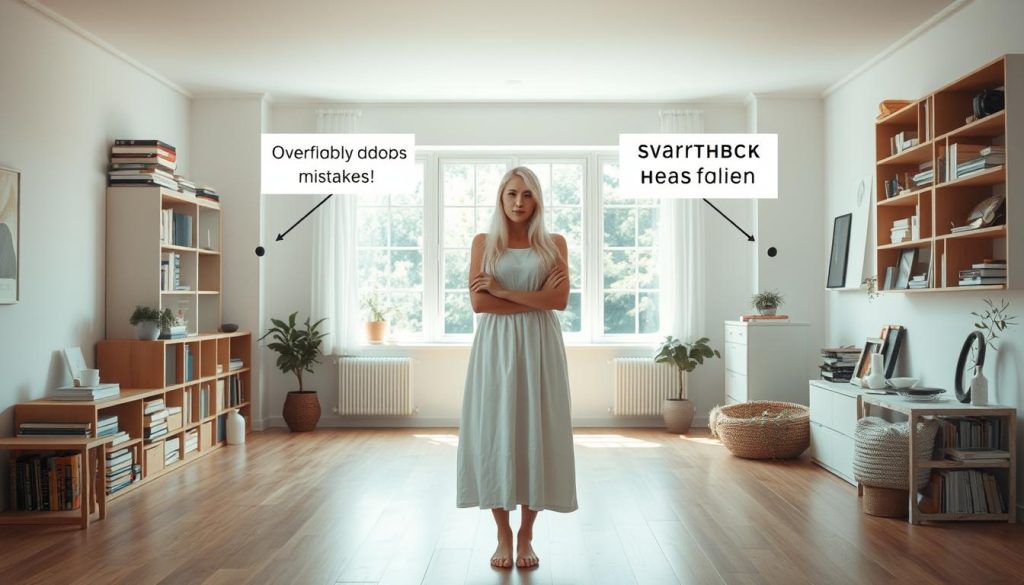
It’s not about owning a magic number of items
There’s no official rulebook or item count to qualify as a minimalist. Tossing things won’t prove anything. What matters is how your days feel.
You don’t need a magic number—ditch that myth and do what fits your life. Keep favorites with intention and let go of the rest without drama.
Modern minimalism vs. minimalism: understanding the difference
The original art movement used industrial materials and self-referential forms—think Donald Judd and Dan Flavin. That history shapes the idea, but the lifestyle version has evolved over years into something more personal.
Minimalism also includes warmth, personality, and practical choices. Trends will come and go, but the core stays the same: clarity, intention, and essentials.
“One good book can help you start, but your daily choices do the heavy lifting.”
- You can call minimalist or not; your peace of mind is the real win!
- Don’t measure success by things tossed—measure by calm mornings and clearer focus.
- Understand the art roots and how the movement shifted into a lifestyle over time.
- Stay curious and kind to yourself—you’re building a life, not passing a test.
| Mistake | Why it hurts | Smart fix |
|---|---|---|
| Chasing a number | Creates pressure, not clarity | Set goals by feeling, not counts |
| Copying trends | Quick decor swaps, short-term gains | Focus on essentials that fit your routine |
| Ignoring history | Overlooks art and design roots | Learn the movement’s context; apply what helps |
Staying Minimal: Maintenance, Rhythm, and Real-Life Change
A steady rhythm beats one big purge—tiny edits add up fast! Keep small resets in your week and you’ll protect the calm you earned.
Seasonal edits and small resets that keep order
Do seasonal edits to keep order in your home and life. A short, focused session each season stops clutter from piling back.
Use a simple checklist for key areas life: closet, kitchen, calendar, and devices. Light weekly tidy-ups keep your environment clear and your space usable.
Using minimalism as a decision filter for new projects
Before you say yes, ask: “Does this give me energy?” Use that idea as a quick filter for people, things, or projects.
Design maintenance into your routine—10 minutes a day keeps chaos away. Involve the people you live with with shared rules and easy systems!
- Protect your environment with buying boundaries and tiny weekly edits.
- Keep what serves your current chapter; release what belongs to the past.
- Let your space and habits evolve—real-life change has a rhythm, not a finish line.
“Small, steady care preserves order and keeps your design choices working for you.”
| Task | How often | Quick benefit |
|---|---|---|
| Seasonal edit | 4× a year | Fresh order; less overwhelm |
| Weekly tidy | 10–20 min | Stable space; less catching up |
| Decision filter | Before new projects | Better focus; saved energy |
Conclusion
This is the moment to lock in the simple changes that free your time and bring more simplicity to daily life! Use minimalism as a practical filter that helps you choose what to keep and what to let go.
Keep it bite-sized: one thing each day builds a steady lifestyle habit. Let simple living guide your next move and protect the calm you made.
Guard your space and your energy with light weekly resets. That keeps clutter away, lowers stress, and boosts the benefits you feel at home and with others.
Draw on the art and design roots of this idea—focus on essentials, elements, and quality. Try a capsule wardrobe, a good book, or a small minimalist home tweak next. You’ve got this!
Discover the transformative power of authentic healing crystals from Conscious Items, designed to align your spirit and connect you with nature’s energy. With over 500,000 satisfied customers and a 4.9/5 Trust pilot rating, don’t miss out on finding your perfect crystal—shop now before these unique treasures are gone! Take their exclusive crystal quiz today at Conscious Items to uncover your spiritual muse.
If you liked reading this article you will love this article Crystal Healing Properties: Unlock White Crystal Power!
Elevate your spiritual journey with Conscious Items’ genuine gemstones, trusted by thousands and backed by a 30-day money-back guarantee. Don’t let these powerful crystals pass you by—stocks are limited, and the perfect one for you is waiting! Visit Conscious Items now to find your crystal match before it’s too late.
If you liked reading this article you will love this article Minimalism Checklist: The ONLY Checklist you need
Morganite Crystal Healing Properties
Habits of Healthy Relationships: 10 Keys to Lasting Love: The Ultimate Love Stone for Heart Healing