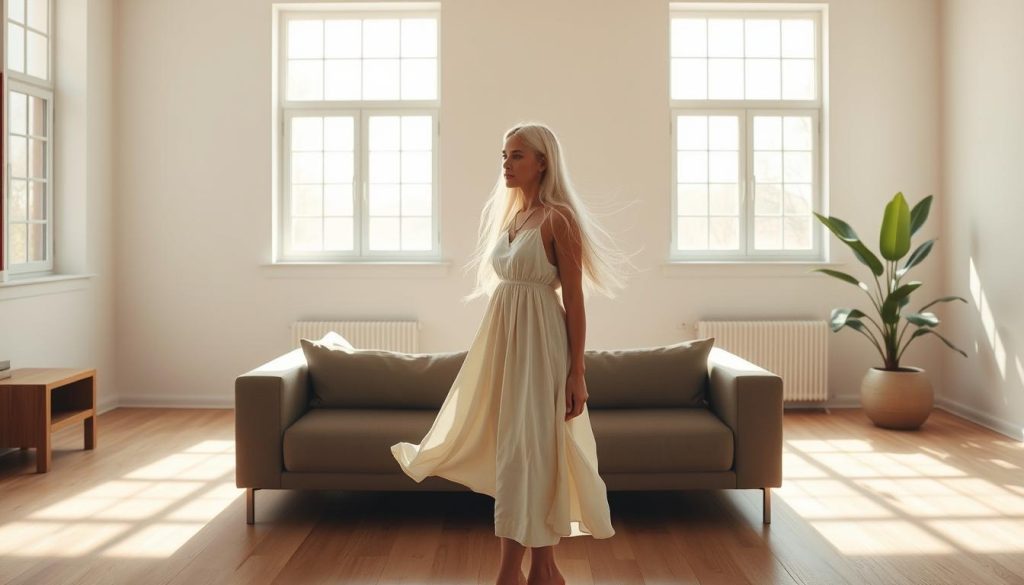

Want a piece of art that calms your room and sharpens your focus? I’ve got you! This intro helps you find a painting that feels clear, calm, and powerful.
What you see is what you see, said Frank Stella — and that idea changed the art world in the 1960s. Artists stripped shapes down to squares, rectangles, and honest surfaces. The result is work that asks you to pay attention to form, color, and material.
You’ll learn why creators like Stella, Agnes Martin, Donald Judd, Dan Flavin, Sol LeWitt, and Robert Morris chose simplicity. You’ll also get quick tips to pick pieces that lift your space and your mood!
Key Takeaways
- You’ll find art that brings calm and clarity to your home.
- Simple forms focus attention on material and color.
- Famous names help you understand the movement’s goals.
- Choose scale, light, and color to make a painting feel right.
- This style turns an object into a daily reminder to breathe!
What Is Minimalism Painting? Clear Definition, Core Qualities, and Why It Resonates
This style treats an artwork as a literal presence—clean, direct, and immediate! You see color, edge, and surface first. The focus is on the work itself, not a hidden story.
“What you see is what you see.”
Donald Judd pushed this further with his idea of a specific object. He argued that some works are neither sculpture nor flat canvases but things made with industrial logic. That idea changed how artists built and showed works in the 1960s and 1970s.
Common traits include geometric forms, repetition, equal parts, and neutral or industrial surfaces. These choices cut metaphor and let tiny shifts in color or line feel intense.
- Minimalism is linked to conceptual art and a wider shift in the art movement of the era.
- It asks you to trust your direct response, not hunt for meaning.
- Knowing the traits helps you spot quality works when you shop or visit galleries.
The Roots of Minimalism: From Early Abstraction to Mid‑Century Breakthroughs
Several early movements set the stage by turning away from depiction and toward pure form. You’ll see how artists pushed for clarity and focus across the 20th century!
Kazimir Malevich and Suprematism
Kazimir Malevich pursued “the supremacy of pure artistic feeling.” His Black Square (1915) acted like a modern icon. It removed the image so feeling could stand alone.
Piet Mondrian, De Stijl, and Geometric Abstraction
Mondrian used orthogonal lines and primary color to create order. This geometric abstraction made simple grids feel alive and musical.
Bauhaus and Constructivism
The Bauhaus taught that form equals function. Josef Albers carried that lesson to the U.S. with his Homage to the Square series.
Constructivists like Rodchenko and Tatlin favored architectonic structures and serial logic. Their focus on modules and industrial methods shaped later work.
“The supremacy of pure artistic feeling.”
- Why it matters: These moves taught artists to prize clarity over depiction.
- You can now spot how simple geometric shapes and structures trace back to this lineage.
| Movement | Key Artist | Focus |
|---|---|---|
| Suprematism | Kazimir Malevich | Pure feeling, flat zones |
| De Stijl | Piet Mondrian | Grids, primary color |
| Bauhaus / Albers | Josef Albers | Design unity, color study |
| Constructivism | Rodchenko / Tatlin | Architectonic structures, serial methods |
Minimalism Emerges in New York: The 1950s-1970s Art World
What started in late‑1950s New York was a move away from raw gesture toward crisp forms and industrial finish. Frank Stella’s Black Paintings at MoMA in 1959 signaled that shift and made the abstract expressionist moment feel changeable.
By the early 1960s galleries like Green Gallery, Leo Castelli, and Pace pushed geometric abstraction into the market. Museums followed: Primary Structures at the Jewish Museum (1966) and Systemic Painting at the Guggenheim (1966) gave the movement institutional weight.
Key artists—Donald Judd, Dan Flavin, Sol LeWitt, Carl Andre, and Robert Morris—used industrial fabrication, serial display, and strict forms. Their works made sculpture feel like objecthood and painting lean on structure.
“Theatricality” became a common critique, but others saw a link to conceptual art and new ways to show ideas.
- You’ll spot how 1950s and 1960s shifts rewired the art world toward presence and clarity.
- Knowing the major shows and dealers helps you read museum modern art labels with confidence.
- Recognizing names like Robert Morris tells you when a work carries that 1960s DNA.
Minimalism Painting
These artists show how a small formal choice makes big impact! You’ll spot rhythm, hush, and bold color that change a room’s energy. I’ll walk you through key approaches so you can pick the right work for your space.
Frank Stella’s pinstripes and shaped canvases
Frank Stella reduced composition to stretcher‑based stripes in his early Black Paintings. The repetition creates rhythm and focus on the canvas edge.
Agnes Martin’s meditative grids and quiet color
Agnes Martin hand‑drew graphite grids and applied soft washes. Her work soothes and invites close, calm viewing—perfect for a bedroom or meditation corner.

Ellsworth Kelly, Kenneth Noland, and the Washington Color School
Ellsworth Kelly favored hard‑edged color fields and shaped supports. Kenneth Noland used targets, chevrons, and stripes to make color feel architectural and playful.
Robert Ryman, Jo Baer, and the monochrome edge
Robert Ryman tested white surfaces and paint’s materiality. Jo Baer framed white fields with colored bands to turn the canvas into an object.
- Quick picks: pick a pinstripe for order, a Martin grid for calm, Kelly/Noland for bold mood, or a Ryman edge for texture!
From Canvas to Object: Sculpture, Structures, and Materials
Sculpture pushed the movement off the wall and into your space, where light, metal, and modules change how you move! Here we meet works that make color and form tangible.
donald judd: specific objects and serial clarity
donald judd moved from painting to stacked boxes and serial units in plywood, galvanized steel, copper, concrete, and colored Plexiglas.
His work treats color as a physical presence with crisp edges and steady rhythm.
dan flavin: light as color and space
dan flavin used standard fluorescent fixtures and colored tubes to make room-sized color fields.
Light becomes the sculpture—softening corners or slicing a wall with hue.
carl andre and sol lewitt: floor grids and systems
carl andre laid modular plates and industrial units on the floor so you feel the work underfoot.
sol lewitt built open cubes and wrote instructions for wall drawings, showing how rules can create beauty and link to conceptual art.
- Practical note: consider footprint, wall load, and ambient light so an object reads strong without clutter.
- Serial structures deepen presence—repeat a form to scale up impact.
| Maker | Signature Approach | Materials |
|---|---|---|
| donald judd | Serial boxes and stacks | Plywood, steel, copper, Plexiglas |
| dan flavin | Fluorescent installations | Standard fixtures, colored bulbs |
| carl andre | Modular floor works | Metal plates, industrial units |
| sol lewitt | Open cubes & wall drawings | Steel, wood, drawn instructions |
Qualities That Define Minimalism: Order, Simplicity, Harmony, and Truth to Materials
Good minimal art shows its rules at a glance, so you feel calm fast!
Order shows up as even spacing, clean edges, and balanced fields. Your eye rests. Your room breathes.
Simplicity is not empty. It is focus. Few elements become more powerful and intentional.
Harmony lives in proportion, rhythm, and repetition. A painting with steady beats supports a room instead of fighting it.

Truth to materials means the surface reads honest—paint reads like paint; canvas reads like canvas. That honesty calms the space.
“If your breath slows and your shoulders drop, the work is working.”
- You’ll look for even spacing and clean edges when you shop.
- You’ll read color as energy—neutrals for serenity, primaries for clarity.
- You’ll notice how forms—stripes, grids, modules—set tempo.
| Quality | What to look for | How it helps |
|---|---|---|
| Order | Equal spacing, crisp edges | Calms the eye; resets the mind |
| Simplicity | Few, strong elements | Focuses attention and lasts |
| Harmony | Balanced proportion and rhythm | Supports room flow |
| Truth to materials | Visible paint, honest surface | Adds tactile honesty to space |
How to Choose a Minimalism Painting for Your Space
Choosing a piece begins with purpose! Think about how you want the room to feel. Do you want energy, calm, or focus? That answer guides scale, shape, and color.
Room-by-room guidance
Living rooms love bold, hard-edge paintings and rich color to energize conversation and anchor sofas. Go big or choose a shaped canvas to make a statement!
Bedrooms work best with soft grids and low-chroma hues. A gentle grid or muted stripes soothes the eye and invites rest.
For offices, chevrons, stripes, and strong geometric shapes boost focus. Entryways benefit from primary hues to greet guests with confidence.
Scale, proportion, and wall context
Match size to furniture: a large canvas anchors a sofa wall. Serial works—two or three aligned pieces—stretch rhythm down hallways and add movement.
Consider negative space: give the work room to breathe so it reads like an object in the room, not a cluttered detail.
Compositions and mood
Stripes and shaped canvases (à la Stella and Kelly) add clarity and architecture. Hand-drawn grids (think Agnes Martin) invite quiet, slow looking.
- Tip: balance glossy surfaces with warm wood or textiles so the finish feels alive, not cold.
- Tip: plan lighting to reduce glare and amplify color from morning to night!
“Trust your eye: if a work quiets the room and sharpens your focus, you’ve found your match.”
Color, Materials, and Light: Making the Most of Minimalist Works at Home
Surface, hue, and light team up to make art feel alive in your home. I’ll show you simple choices that boost presence and mood!
Color strategies: neutrals, primaries, and psychological impact
Pick color on purpose. Neutrals soothe. Primaries clarify and energize.
Limit your palette to keep the room open and focused. Contrast wall and art so both pop!
Surface and media: oil, acrylic, encaustic, Plexiglas, fluorescent light
Different media give different vibes. Oil and acrylic offer varied sheen and brushwork.
Encaustic gives a matte glow. Plexiglas brings translucent color that shifts with light.
And light itself can be a medium — think fluorescent tubes that wash a room in hue.
Lighting for Minimalism: natural light, LEDs, and avoiding glare
Diffuse daylight when possible. Use high‑CRI LEDs to keep colors true. Angle fixtures to cut glare.
Tune color temperature: warm for cozy spots, neutral for clarity in workspaces.
“A simple lighting plan makes a work glow day after day.”
- Tip: Match finish to mood — glossy for zing, matte for calm.
- Tip: Protect art with UV filters where needed to keep colors true.
| Element | Option | Effect |
|---|---|---|
| Color | Neutrals / Primaries | Soothes or clarifies mood |
| Medium | Oil, Acrylic, Encaustic, Plexiglas | Controls sheen, texture, and translucency |
| Light | Daylight, High‑CRI LEDs, Fluorescent | Keeps color accurate and sets atmosphere |
| Finish | Matte / Gloss | Calm or lively presence |
Plan Your Art Pilgrimage: New York Landmarks and U.S. Museums for Minimalism
Plan a museum day that turns seeing into a lesson—start where New York reshaped modern art! I’ll help you map a route that mixes big museums and quiet galleries so each stop teaches you something new.
Must-see in New York: Museum of Modern Art, Solomon R. Guggenheim, Jewish Museum
Begin at the Museum of Modern Art to view Stella, Kelly, and key works that link to 1950s shifts from abstract expressionism. Then move to the Guggenheim for curved galleries that change how a work reads.
Finish in the Jewish Museum to feel the historic pulse of the 1960s and the Primary Structures moment! Spot wall labels that name curators, dates, and links to mark rothko and josef albers.
Tracing artists across the U.S.: Dia Beacon and beyond
Take a day trip to Dia Beacon to feel Judd’s boxes, Flavin’s light, and large sculpture in room-scale spaces.
Track painting-focused artists like Brice Marden, Jo Baer, and Robert Mangold alongside object makers such as Donald Judd, Sol LeWitt, and Carl Andre. Visit old galleries—Green Gallery, Leo Castelli, and Pace—to see where the art world made careers.
- Tip: Balance highlights with slow looking and take photos of sightlines to apply at home!
- Tip: Explore regional museum modern collections too—your next inspiration might be nearby.
Conclusion
The story ends with art that asks for simple attention and gives back focus and calm. You’ve seen how minimalism grew from early abstraction through the big shifts of the 1950s and 1960s. Abstract expressionism primed viewers for direct presence, and figures like Mark Rothko helped bridge the feeling.
You now know the names, the methods, and the tools: scale, light, and color. Use them to choose a painting that lifts your room and your routine.
Trust your eye! If a work makes you breathe easier, it’s a yes. Take the next step—pick the piece that sparks joy and keeps your space clear, calm, and alive!
Discover the transformative power of authentic healing crystals from Conscious Items, designed to align your spirit and connect you with nature’s energy. With over 500,000 satisfied customers and a 4.9/5 Trust pilot rating, don’t miss out on finding your perfect crystal—shop now before these unique treasures are gone! Take their exclusive crystal quiz today at Conscious Items to uncover your spiritual muse.
If you liked reading this article you will love this article Crystal Healing Properties: Unlock White Crystal Power!
Elevate your spiritual journey with Conscious Items’ genuine gemstones, trusted by thousands and backed by a 30-day money-back guarantee. Don’t let these powerful crystals pass you by—stocks are limited, and the perfect one for you is waiting! Visit Conscious Items now to find your crystal match before it’s too late.
If you liked reading this article you will love this article Minimalism Checklist: The ONLY Checklist you need
Morganite Crystal Healing Properties
Habits of Healthy Relationships: 10 Keys to Lasting Love: The Ultimate Love Stone for Heart Healing