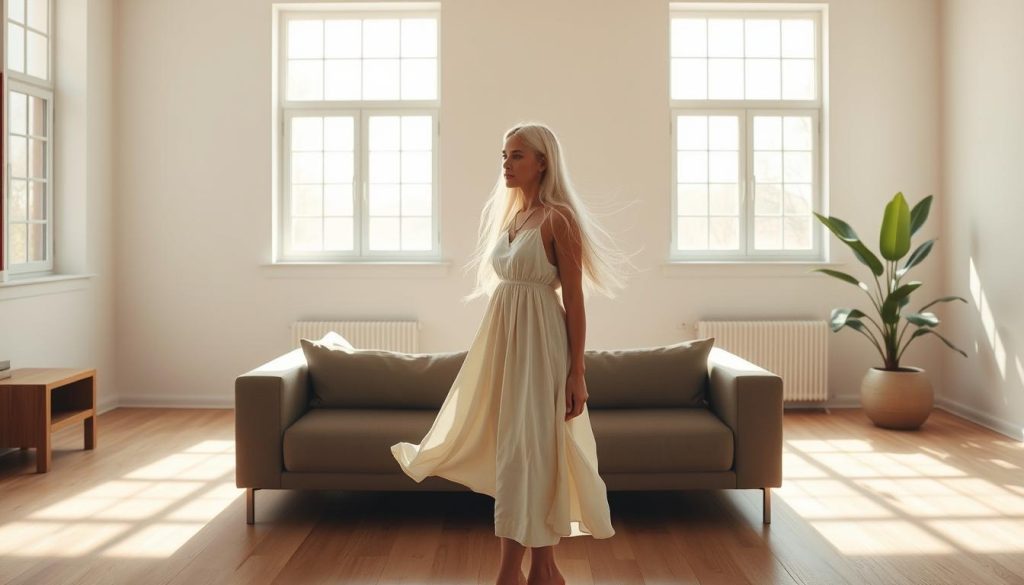
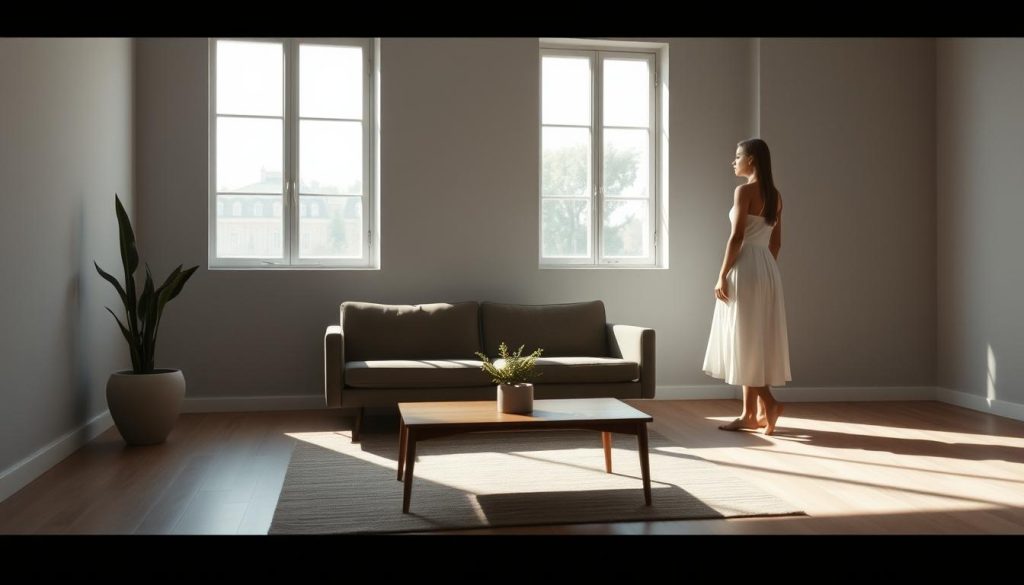
Ready to stop clutter and actually enjoy your home? Have you ever wondered why some rooms feel calm and others feel noisy, even with the same square footage?
I’m with you! Let’s make your room breathe with a clear plan. Clean lines and a soft color palette bring visual calm. We’ll focus on functional design and fewer, better pieces.
Think quality over quantity! Clear surfaces and smart storage make daily life easier. I’ll show real example ideas from a clutter-free kitchen to a relaxed living setup that prove simple can be stunning.
By the end, you’ll know what to keep, what to let go of, and where to focus your energy! This approach creates a space that supports your life and reduces stress, day to day.
Key Takeaways
- Clear surfaces and fewer items create visual calm.
- Choose functional design and quality over quantity.
- Set simple rules so your home stays easy to maintain.
- Use examples from the kitchen and living areas to guide edits.
- Edit with confidence and focus on items that bring value.
The Mindset Shift: From More Stuff to Fewer, Better Essentials
Swap the habit of buying for the habit of choosing — pick fewer things that truly serve you! This is the heart of the change. When you focus on quality over quantity, your rooms calm down and cleaning gets easier.
Quality over quantity: invest in pieces you’ll love and use
Start by defining your essentials. Notice what you touch each day and keep only those items in easy reach. Everything else can live out of sight or go.
Ask one question for every piece: does this serve my life or steal my attention with clutter? If it steals attention, let it go!
- Choose multipurpose items to free up space and support living needs.
- Invest in a few durable pieces that make you proud every time you use them.
- Adopt a simple rule: one in, one out. Balance stays easy without constant edits.
Editing your home is self-care. As you remove distractions, your energy lifts and the space feels lighter. Use these ideas to keep the focus on what matters most!
Minimalism Decor
Think of your room like a promise: every piece should earn its place and make daily life easier! Start with a clear goal and keep function first.
Core principles: clean lines, clear surfaces, and layouts that let you move and live with ease. A functional plan helps you use the room instead of tripping over it.
I love warm minimalism because it keeps rooms inviting. Swap all-stark white for layered texture and simple, soft colors. Use fabrics like linen or mohair and warm woods to avoid a sterile feel.
Treat materials as heroes—stone, plaster, and wood add depth. Let natural light and silhouette do the heavy visual lifting. A calm palette and purposeful pieces make the space breathe.
- Design each zone for intent so mornings flow and evenings unwind.
- Keep surfaces clear and choose items that perform and look great.
- Adopt small rituals—reset surfaces nightly to keep clarity long-term!
These ideas combine Bauhaus form and Japanese calm to give you a modern, livable look that feels easeful and honest.
Start with the Big Pieces: Furniture That Defines the Room
Start with the sofa and work outward; the largest items decide how your space moves. Pick a strong anchor and the rest becomes easy!
Choose clean-lined, Scandi and midcentury-inspired pieces
Go for timeless lines. Scandi and midcentury-inspired design gives visual lightness and long-lasting style. A raised-leg sofa shows more floor and instantly lifts the room.
Edit down to the essentials for flow and easy cleaning
Less is functional. Remove a redundant chair or a bulky console. One great sofa, a single chair, a slim table, and a lamp often cover all your needs.
- Big pieces dictate traffic — choose sofas, chairs, and a table that suit your layout!
- Give every item a clear place so paths stay open and cleaning is quick.
- Keep coffee and side tables lean: neutral finishes and hidden storage work wonders.
| Item | Benefit | Suggested Count |
|---|---|---|
| Sofa | Anchor, seating comfort | 1 |
| Armchair | Flexible seating, visual balance | 1 |
| Slim table | Surface without clutter | 1 |
Create a Calm Living Room That Actually Lives Well
Turn your living area into a calm hub that actually supports how you live and relax. Start with one large piece of furniture that feels like home and plans the layout around it.
Anchor seating: L-shaped sofa or streamlined couch as focal point
Let a streamlined couch or L-shaped sofa anchor the living room so the layout feels grounded and super comfy! This big anchor creates sightlines and a clear spot for conversation.
Rug as a zone-maker for open-plan spaces
Use an area rug to define zones and add visual breathing room. Leave a strip of floor around the rug so the room reads larger and cleaner.
Keep the coffee table intentional, not crowded
Style the coffee table with intention: a neat stack of books, a minimal floral in an artisan vase, and one meaningful object. Group in odd numbers and keep the surrounding spot clear.
- Pull in soft color with one or two pillows so the eye rests.
- Add one piece of artwork with presence instead of many small frames.
- Balance natural and warm light: drapes open by day, lamps at night.
| Element | Purpose | Quick Tip |
|---|---|---|
| Anchor seating | Defines layout, invites use | Choose L-shape or streamlined couch |
| Rug | Zones open plans, softens floor | Leave floor visible around edges |
| Coffee table | Focal surface, styling spot | Keep 3 objects max; tidy stack |
Design a Minimalist Kitchen Without Losing Function
A kitchen should work hard and look calm—let’s design it to do both! I’ll show simple moves that keep the room bright and practical without fuss.
Recessed cans and clean hardware for visual clarity
Recessed light reduces visual clutter and gives even task illumination. Pair cans with simple knobs or pulls on Shaker-style bases for a quiet, cohesive look!
Open walls: skip uppers or style shelves sparingly
Consider skipping upper cabinets to free the wall and make the space feel larger. If you add floating shelves, style them with restraint—one bowl, one plant, a tidy stack of plates.
Choose matching counters and a uniform backsplash material so the eye rests. Keep counters clear and put most items behind doors.
Prioritize smart storage—drawer organizers, pull-outs, and tray dividers keep items hidden but handy. These small systems help you create minimalist function while the kitchen stays useful and warm!
Bedroom Serenity: Walls Bare, Textures Rich
Make your bedroom feel like a deep exhale the moment you step in. Start with a bold bed and keep the walls calm so the room can breathe!
Symmetry brings instant calm. Put matching nightstands and lamps on each side. This small rule makes the whole space feel balanced and restful.
Symmetry with nightstands and lamps for instant calm
Two identical lamps give predictable light and a soothing rhythm. Use warm bulbs and dimmers to wind down the evening.
Layer natural materials and soft tones for comfort
Layer linen sheets, a nubby throw, and a wool rug to add texture and warmth. Choose soft tones like ivory, warm beige, or muted gray for bedding and pillows.
- Keep the walls bare and let the headboard do the talking.
- Limit bedroom pieces to bed, two nightstands, and a slim dresser.
- Add one small accent—a branch in a ceramic vase—to complete the look.
| Item | Why it matters | Quick tip |
|---|---|---|
| Statement bed | Anchors the room and sets the mood | Choose a strong silhouette and keep walls bare |
| Matching nightstands | Creates symmetry and order | Pick slim designs to save space |
| Layered textiles | Adds depth and comfortable feel | Mix linen, wool, and a nubby throw |
| Warm lighting | Helps you relax and signals sleep time | Use warm bulbs and a dimmer switch |
Color, Palette, and Light: The Power Trio
Let color be your anchor—then build mood and depth around it. A single dominant hue makes choices easy and gives the whole room instant cohesion. Pick one color and work out a calm tonal scheme that feels intentional!
Tonal palettes that add depth without clutter
Choose one dominant color and support it with two complementary tones. Layer similar hues in different materials—linen, wool, plaster, and wood—to add richness without adding objects.
- Keep it tight: two to three colors total for a unified look.
- Repeat small accents to carry the palette from room to room.
- Tip: warm beiges soften corners; black-and-white keeps lines crisp!
Maximize natural light with window treatments that breathe
Use airy curtains or simple shades so natural light floods the room. Let windows lead by day and add warm, dimmable lamps by night!
“Light shapes mood. Let it work for you.”
Dominant color strategies: beige, black, white, or gray
Pick a dominant color—beige, black, white, or gray—and build a thoughtful palette around it. Layering similar colors in varied textures gives depth while keeping the visual field calm.
- Use tones that flatter your architecture.
- Leave negative space so the eye can rest and the room reads larger.
- Think of color and light as partners in design; together they define the space.
Walls, Artwork, and Accents: Edit to Elevate
Let the wall do the talking by simplifying what hangs on it. A clean approach makes the whole room feel calmer and more intentional!
Replace busy gallery walls with one large canvas or a uniform row of frames. This gives breathing room and helps the art read like a feature, not background noise.
Uniform art or a single statement piece
Pick either a single statement artwork or matching pieces lined up. Align frames in a straight horizontal or vertical line for instant order.
Wood slat walls and plaster textures
Try a wood slat feature wall or a subtle plaster finish as an architectural accent. These materials add texture without adding more objects to the space.
- Keep walls edited: a little breathing room around art makes the room feel elevated!
- Use art scale wisely—big walls need big work, small walls need restraint.
- Limit accents on nearby surfaces; when the wall speaks, nearby items should whisper.
- Example: one large canvas above the sofa, a slatted wall behind the TV, and no competing pieces.
“When the wall is clear, the room breathes.”
Materials and Texture: Bring Warmth to Minimalist Design
Use honest, tactile materials to make a clean space feel cozy and real. Choose surfaces that invite touch and add personality without clutter. This is how a room stays airy but feels like home!

Natural materials: wood, stone, linen, and nubby textiles
Lead with natural materials—warm wood, stone counters, linen, and wool add real comfort. A plaster wall beside an oak shelf balances cool and warm tones beautifully.
- Layer texture: a nubby sofa throw, jute rug, and smooth plaster wall create tactile contrast.
- Keep the palette neutral: fewer colors, more depth—let surfaces bring character.
- Mix finishes: matte paint with a subtle sheen on wood gives dimension without fuss.
- Living areas tip: pair a solid oak coffee surface with a soft wool rug and linen drapes for rich contrast!
“Oak + limestone + ivory linen + clay ceramics = timeless, tactile calm.”
Try this simple example combo in your next update. It makes your design feel considered and your space warm and inviting!
Declutter and Storage: Keep Surfaces and Floors Clear
Tackle one room at a time so wins stack up and clutter shrinks quickly. Start small and celebrate the change — this builds momentum fast!
One room at a time: make a calm center and expand
Pick a calm center — a corner or a tabletop — and clear it completely. When one zone feels peaceful, move outward and repeat the process in the next room!
Clear the floor beyond furniture. No stacks, no bins left in sight. Open floor = instant breathing room for your mind.
Store out of sight, assign a place, and keep it there
Store necessities out of sight in drawers and cabinets. What you don’t see won’t distract you!
- Assign a place for every item and return it daily — this protects your calm.
- Keep surfaces nearly empty; one or two accents max so quick resets take minutes.
- Prioritize essentials only; if an item doesn’t serve you weekly, it probably doesn’t deserve a front-row spot.
“A home with clear floors and tidy surfaces makes everyday life feel lighter.”
| Action | Why it helps | Quick tip |
|---|---|---|
| One-room focus | Builds momentum and reduces overwhelm | Set a 2-hour timer and finish one zone |
| Store out of sight | Reduces visual clutter and stress | Use shallow drawers and baskets inside cabinets |
| Assign a place | Makes daily tidy habits automatic | Label shelves or drawer fronts |
Coffee Table Styling: A Minimal Focal Point
Make your coffee table the tiny gallery that ties the whole room together! A single, calm vignette makes the living space feel curated and lively without crowding it.
Odd-number groupings: books, artisan vase, and a meaningful object
Go for three things: a tidy stack of museum books, a minimal floral or orchid in an artisan vase, and one meaningful object. This trio adds texture, height, and a graphic line that reads like art.
Vary the heights—stack, vessel, sculptural piece—so the scene stays dynamic yet calm. Keep the spot around the table clear so movement is easy and the composition can shine!
- Treat your coffee table like a curated gallery—three items nail the look!
- Choose a low, neutral table to ground the area and let seating breathe.
- Hide coffee essentials in a tray or drawer so the surface reads clean.
- When in doubt, remove one item; space is your secret accent!
“A small, edited table scene feels intentional and welcoming.”
Budget-Savvy Minimal Decor Ideas You Can Do Today
Start with what you have and watch your home transform into a calmer, smarter space. This is low-cost and high-impact—perfect for a Saturday reset!
Shop your home first: move your best pieces into one room and notice the instant lift. You’ll get a fresh look for free and learn what items truly matter.
Prune bookcases hard. Donate books you won’t reread. Mix upright and horizontal stacks and place a few meaningful objects in odd numbers to keep the shelf airy and intentional.
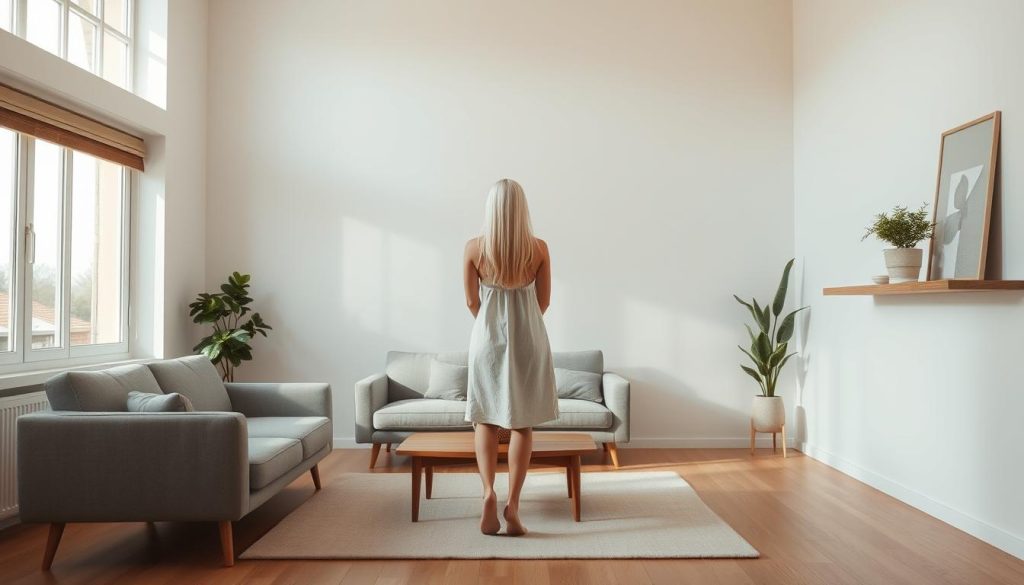
Snip greenery from your yard for a simple centerpiece. One leafy branch on a table adds life to the living room, kitchen, or bedroom—zero cost, big charm!
Pick one dominant color—light beige works wonders. Repeat that color across tones in rugs, upholstery, and throws for cohesion fast.
- Remove one extra piece of furniture in the living room to free up space immediately.
- Clear a single kitchen counter and keep it clear for a week—habit sticks fast!
- Refresh the bedroom with matching lamps and simplified bedding for calm symmetry.
“Example weekend plan: declutter shelves, swap art to one hero piece, and add a leafy branch—clean, crisp, complete!”
Common Minimalism Mistakes to Avoid
Don’t confuse empty surfaces with good design — warmth matters as much as space! I want you to edit with purpose so your room feels calm and lived-in, not cold.
Confusing bare with boring: use texture and subtle accents
Empty walls and bare tables can feel sterile. Add texture: a woven throw, a plaster vase, or a soft rug. These small moves stop a space from feeling like a showroom.
Tip: Pick one tactile material per zone and repeat it to tie the room together!
Over-decorating shelves and walls undermines calm
Too many small items create visual clutter and steal your focus. One strong piece on a wall beats a busy collage every time.
On shelves, choose three objects max per shelf and leave negative space. Keep kitchen counters mostly clear and protect bedroom nightstands—lamp, book, single accent. This keeps daily life simple and soothing.
| Mistake | Why it harms | Quick fix |
|---|---|---|
| Overstuffed shelves | Creates clutter and stress | Edit to 3 items per shelf; add breathing room |
| Busy gallery wall | Competes with the room’s calm | Choose one statement piece or uniform frames |
| Cluttered surfaces | Breaks daily routines and focus | Clear surfaces nightly; keep one purposeful accent |
Design is intention. Edit with that in mind and your living, kitchen, and bedroom areas will feel calm and useful. You’ll love the clarity and still keep a warm, inviting space!
Conclusion
End with intention—edit, arrange, and set routines so your space finally works for you. Remove what steals attention. Keep what serves your daily life and joy!
I want you to create minimalist routines that stick: nightly resets, a place for everything, and tiny tweaks that add up fast. Invest in the essentials and choose pieces that earn their spot.
Use these ideas as a living checklist: anchor seating, tonal palettes, edited walls, and smart storage wins. Keep your focus on comfort and clarity—fewer things, better choices, and a calm home that supports your goals.
Start today: clear one surface, style one focal point, and remove one extra item from each room. Momentum feels amazing—your living life will thank you!
Discover the transformative power of authentic healing crystals from Conscious Items, designed to align your spirit and connect you with nature’s energy. With over 500,000 satisfied customers and a 4.9/5 Trust pilot rating, don’t miss out on finding your perfect crystal—shop now before these unique treasures are gone! Take their exclusive crystal quiz today at Conscious Items to uncover your spiritual muse.
If you liked reading this article you will love this article Crystal Healing Properties: Unlock White Crystal Power!
Elevate your spiritual journey with Conscious Items’ genuine gemstones, trusted by thousands and backed by a 30-day money-back guarantee. Don’t let these powerful crystals pass you by—stocks are limited, and the perfect one for you is waiting! Visit Conscious Items now to find your crystal match before it’s too late.
If you liked reading this article you will love this article Minimalism Checklist: The ONLY Checklist you need
Morganite Crystal Healing Properties
Habits of Healthy Relationships: 10 Keys to Lasting Love: The Ultimate Love Stone for Heart Healing