
Minimalism Artists Ever wondered how a few bold choices can change the way we see art? I promise this intro will spark your curiosity! We’ll meet the innovators who set a new bar in the 20th century and learn why their work still matters in the 21st century.
I’ll walk you through the scene that began in the United States in the 1950s–1960s. These pioneers used geometric shapes, industrial methods, and radical simplicity to strip art to its core. You’ll see names like Carl Andre, Dan Flavin, Donald Judd, Sol LeWitt, and Robert Morris and understand their impact fast!
This is visual art at its clearest! We’ll show how a New York circle turned an idea into a movement and why that shift still influences galleries and creators today. Get ready to spot the essentials and feel confident talking about this art movement like a pro!
Key Takeaways
- You’ll recognize the core ideas behind this art movement quickly.
- Key figures from New York reshaped how art looked and felt.
- Simplicity and industrial process made artworks more direct and powerful.
- The 20th century set the stage; the 21st century keeps the conversation alive.
- Quick cues help you spot the minimalist spirit in any gallery visit.
What Is Minimal Art? A quick primer on the movement, form, and materials
Minimal Art grew from a need to strip form down to its essentials and let the object speak. I want you to spot it in a gallery fast! The movement started in the U.S. in the 20th century and used a tight visual vocabulary.
This style pares down abstraction so shape, scale, and finish matter more than personal gesture. Artists chose industrial materials—metal, concrete, Plexiglas, and fluorescent tubes—to make the work feel factual and direct.
- Think streamlined form and sturdy materials used with clear intent.
- Seriality and repetition focus your eye on the whole object at once.
- Color often comes from the material itself, not from expressive brushwork.
- “Specific objects” blur painting and sculpture into a single presence.
- Fabrication techniques remove visible hand and heighten presence.
Walk away with a quick checklist: look for simple shapes, repeated units, factory finishes, and objects that ask you to experience them, not to read an artist’s story. This is modern art made to be seen plainly—and powerfully!
The Essential Minimalism Artists You Should Know
These creators used basic elements—steel, light, tile—to make bold statements about form and space! I’ll introduce the key names so you can spot their signature moves in a gallery.
Carl Andre
Floor sculptures laid in grids from copper, brick, and stone invite you to walk around and feel how material ages.
Dan Flavin
Flavin used fluorescent fixtures from 1963 to color rooms and change perception as you move.
Donald Judd
Judd left painting for fabricated specific objects—serial boxes and stacks made in New York and Marfa with crisp logic.
Sol LeWitt
LeWitt put the idea first with instruction-based wall drawings and modular structures that others could enact.
| Artist | Key medium | Signature |
|---|---|---|
| Carl Andre | floor sculpture | laid grids of industrial materials |
| Dan Flavin | light | fluorescent installations |
| Donald Judd | fabricated objects | serial boxes, New York → Marfa |
| Sol LeWitt | wall works | instruction-based drawings |
Quick takeaway: meet these artists to link names to iconic works and to feel how sculpture, light, and pared-down painting shape the room! You’ll spot how simple choices make powerful works.
Minimalism Artists
Let’s pin down who belongs to the core circle and why their choices changed how we see objects today! I want you to feel confident spotting key names and the shared principles they used.
Why the 1960s mattered: This was when serial, geometric, and industrial fabrication came together to make art feel factual and immediate. Works became statements about presence, not personal emotion.
What to expect in a gallery: sculptures and objects that claim space and ask you to move. Colors come from materials—lacquer, metal, Plexiglas—so hue reads as a material fact, not expressive paint.
- Look for clean geometry and repeated units.
- Notice exact joins and factory finishes.
- Feel how pieces shape your path through the room.
| Figure | Primary medium | Signature move |
|---|---|---|
| Carl Andre | industrial floor modules | laid grids that alter floor perception |
| Dan Flavin | fluorescent light | color from fixtures that change a room |
| Donald Judd | fabricated objects | serial boxes and precise joins |
Quick cheat sheet: presence over drama. Structure over story. Use these cues to recognize the movement’s DNA fast and enjoy the clarity of its abstraction!
Minimalism Painters to Watch: color, lines, and the wall
On the wall, color and line do the heavy lifting—these painters teach you how to read edges and space! I’ll guide you through three key figures who kept painting vital as sculpture and design rose.
Jo Baer — edge-banded canvases, perception, and form
Jo Baer framed white interiors with dark and color bands to control what you see. Her borders make the center hum and shift with your angle.
These paintings force your eye to the edge and make the canvas feel like a thing, not just an image!
Robert Mangold — shaped canvases, geometry, and line
Robert Mangold pursued shaped monochrome canvases and added precise lines to map balance. He insisted on the flatness of the support and the power of a mark.
Lines act as structure here. They set rhythm and keep the geometry deliberate.
Brice Marden — monochromes and the materiality of paint
Brice Marden created large encaustic monochromes in the mid‑1960s. His multi‑panel works glow from thick surfaces and careful, slow application.
Material matters: your experience comes from surface and light, not drama. This ties back to the shift away from abstract expressionism toward object-like canvases.
“The canvas becomes a thing in the room, and your looking completes it.”
- You’ll spot how edges, surfaces, and quiet color turn painting into presence.
- Watch how lines are not decoration but form-makers on the wall.
- These artists kept painting alive in New York and beyond by treating canvases as objects you meet!
Light, Space, and Materials: West Coast sensibilities and industrial finishes
Los Angeles gave birth to art that changes when you move—light itself became the tool! The Light and Space and Finish Fetish groups in Southern California used sun, gloss, and tech to make rooms feel alive.
Mary Corse — glass microspheres, light, and perceptual painting
Mary Corse mixed glass microspheres into paint so a white panel blazes or softens as you step. These works reward movement and close looking—perception is the point!
John McCracken — glossy planks bridging wall and floor
John McCracken made mirror-bright resin planks that lean between wall and floor. These sculptures ask you to walk around them and feel the shift in depth and reflection.
Larry Bell — cubes, coated glass, and spatial color
Larry Bell coated glass to trap color in space. His cubes are transparent and reflective, so colors float and edges fade depending on your angle.
- Head West and feel how light becomes the medium—your movement changes what you see!
- Materials like resins and glass make finishes feel industrial and calm.
- Roots in the 1960s link this scene to new york, but the mood is distinctly airy and precise.
“Even without fluorescent light, illumination is the subject—surfaces breathe and rooms pulse with color.”
Takeaway: Look from multiple angles! Space is active here, and the finishes turn simple forms into fresh, living works of art.
Conceptual and Process Crossovers that shaped Minimalism
C
Some creators let idea and making collide to open new doors for art! You’ll notice how instructions and material choices became part of the message.

Eva Hesse — serial forms, latex, fiberglass, and vulnerability
Eva Hesse stretched serial systems by using soft, shifting materials like latex and fiberglass. Her pieces keep a steady logic while feeling fragile and human.
Her work shows process as presence: drips, seams, and tensions matter. You can see the making in the object!
Richard Serra — monumental steel, space, and embodied movement
Richard Serra made steel corridors that teach you the sculpture with each step. These massive works demand that you move through them and learn the space by body feeling.
“Sol LeWitt’s ideas helped turn instruction into a form of creation.”
- Conceptual art shifted focus from finish to intent and rules!
- Process art made the act of making visible and essential.
- Practice became the point: how something was built is what you read.
| Artist | Material | Key effect |
|---|---|---|
| Eva Hesse | latex, fiberglass | tender serial forms that reveal making |
| Richard Serra | rolled steel | embodied navigation and altered space |
| Sol LeWitt (influence) | instructions | idea-first, shaping conceptual art |
Quick note: Many of these works grew in and around New York, where studios and galleries tested risky ideas. Look for seams, choices, and actions—those are the clues that concept and process made the work alive!
Before the 1960s: roots from Bauhaus to Abstract Expressionism
We can map how early 20th-century experiments set the stage for the pared-back works that followed! These threads run from European design schools to New York studios.
Bauhaus taught functional clarity and the idea that “less is more.” That design smarts shaped how later makers thought about form and use.
De Stijl and Suprematism pushed pure fields and strict geometrical forms. Those visual rules are vital DNA for the later movement.
- Constructivism insisted on structure and material facts—art that reads like engineered making.
- The American Abstract Artists kept abstraction alive in New York through the 20th century.
Abstract expressionism then added scale and single-color focus. Think Newman’s zips and Reinhardt’s near-black canvases. These works moved the idea of painting toward object and presence.
“Form and discipline build steadily so the next step feels inevitable.”
Quick take: follow this timeline and you’ll spot ancestors in every clean edge and measured plane you see in a museum!
Key characteristics: geometry, seriality, industrial processes, and the “specific object”
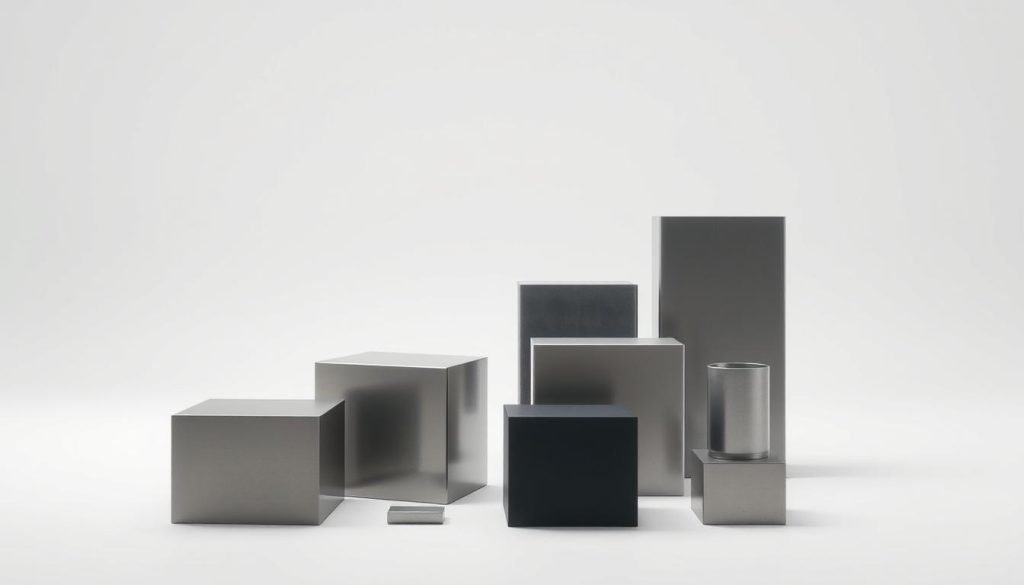
Focus on the object’s presence: shape, rhythm, and finish tell the whole story. You’ll spot geometry first—clean edges, simple planes, and balanced scale.
Next, notice seriality. Repeated modules or boxes create a calm beat that guides your eye. These repeated elements make the whole stronger than each piece alone.
- Here’s your fast checklist:
- Look for serial forms—repeated modules that set a steady rhythm!
- Notice industrial materials and finishes—metal, Plexiglas, concrete with precise joins!
- Feel how the object sits in space—factual and present, not a story or symbol!
- “Specific object” means you meet the work as itself; the form does the talking!
- Structures stay simple so the whole hits you at once.
- Techniques favor fabrication and standard parts to reduce the visible hand!
- Process is disciplined and clear—even when hidden—to keep attention on presence!
“Meet the work on its own terms—its facts are the experience.”
Use this list in any gallery and you’ll decode the style with ease! This clear approach makes the art feel immediate and honest.
How to look at Minimal art: light, color, scale, and time in the gallery
Look carefully: these works reveal more when you give them a little time and movement! I want you to feel confident in the gallery, so try a simple routine.
Slow down. Give each piece a minute or two. Let your eyes adjust and notice shifts in light and color as you move.
- Step side to side. Reflective surfaces and glowing tubes change with your angle.
- Check the wall and the floor—some stacks and planks alter your path through the space.
- Back up to take in scale, then come close to scan edges and joins.
- Compare nearby paintings to see how surface and edge change your reading.
| Focus | What to do | What you learn |
|---|---|---|
| Light | Move slowly across the room | How illumination changes color and depth |
| Wall | Note installation and relation to the floor | How placement alters space and scale |
| Time | Wait and return after a minute | Details and mood reveal themselves |
Try this way of looking and your next gallery visit will feel richer! Let the piece work on you—give it time, and it will open up.
Where to see Minimalism in the United States today
For a hands-on encounter with pared-back work, map a trip through New York and important regional venues! I promise you’ll leave with fresh eyes and big questions.
Start in New York for deep collections and immersive rooms. MoMA and local museums hold major pieces that show how sculpture and painting speak to each other.
Dia Beacon, north of New York, hosts large-scale installations that change the way you move through space. These rooms let the works breathe and grow with time.
- See Donald Judd in his SoHo building to feel art, furniture, and rooms aligned with exacting clarity.
- Head to Marfa to visit Donald Judd’s permanent installations across buildings and land—pure presence!
- Track Dan Flavin installations to watch colored light redraw the wall and corners of a room.
Major museums like SFMOMA and traveling collections round out a tour so you can walk from sculpture to painting. Seek out 1960s rooms where serial pieces and stacks reveal roots.
“Plan extra time—these spaces reward long, quiet looking!”
Practical tips: ask guards about viewing angles, linger, and bring a friend to compare notes. Your visit will feel richer and more fun that way!
Conclusion
The movement that began mid‑century distilled geometry, seriality, and industrial process into clear, present objects! What started from Bauhaus, De Stijl, Constructivism, and even abstract expressionism still shapes modern art today.
You now have simple tools to read a gallery: look for form, finish, and how a piece sits in space. You met the key artists and learned how choices about material and scale make the work speak.
Take it with you: test rooms, compare surfaces, and trust your eye. Minimalism lives in museums and in 21st century design. Keep looking—these quiet pieces teach you more each time you return!
Elevate your spiritual journey with Conscious Items’ genuine gemstones, trusted by thousands and backed by a 30-day money-back guarantee. Don’t let these powerful crystals pass you by—stocks are limited, and the perfect one for you is waiting! Visit Conscious Items now to find your crystal match before it’s too late.
If you liked reading this article you will love this article Minimalism Checklist: The ONLY Checklist you need
Morganite Crystal Healing Properties
Habits of Healthy Relationships: 10 Keys to Lasting Love: The Ultimate Love Stone for Heart Healing