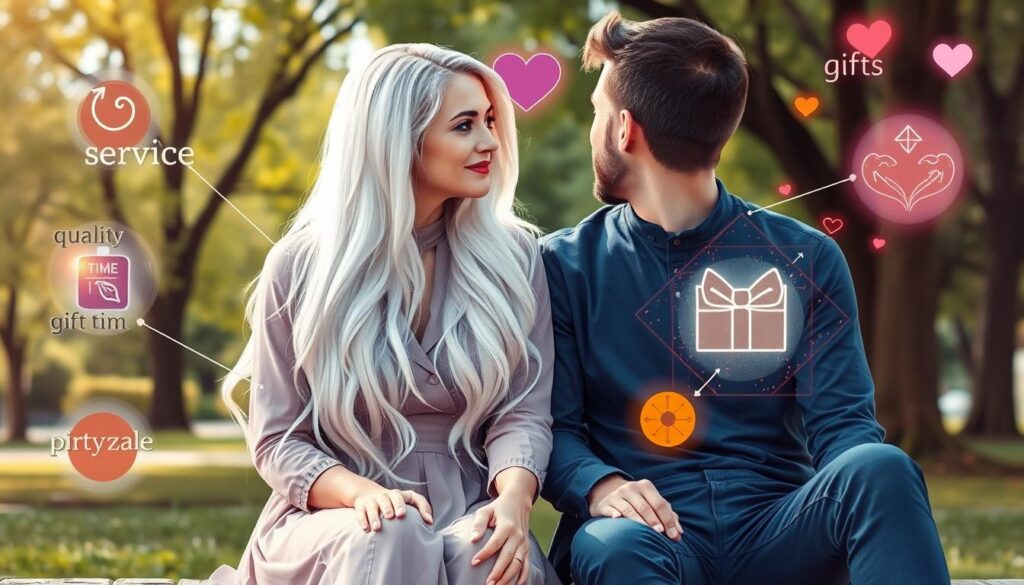
Did you know 75% of couples struggle because they speak different emotional dialects? It’s true! Dr. Gary Chapman’s groundbreaking concept reveals why some relationships thrive while others barely survive. Your love language isn’t a choice—it’s wired into your heart!

Take Sarah and Mike. She spent weeks picking the perfect anniversary gift, only for him to shrug and say, “Why didn’t we just spend time together?” Sound familiar? Mismatched expressions of affection cause endless frustration, but here’s the good news: understanding these emotional cues can transform every bond you have.
By the end of this article, you’ll uncover your primary love language—and gain the tools to deepen connections effortlessly. Ready to turn misunderstandings into meaningful moments? Let’s dive in!
Key Takeaways
- Most couples face challenges due to mismatched emotional needs.
- Dr. Gary Chapman’s research identifies five core ways people give and receive affection.
- Your dominant love language shapes how you perceive care and commitment.
- Recognizing these patterns improves communication in all relationships.
- Small adjustments in expressing love can lead to big emotional rewards.
Introduction: The Power of Love Languages
Ever felt like you’re pouring your heart out, but your partner just doesn’t get it? That’s the love language gap in action! Imagine speaking French to someone who only understands Mandarin—your affection might get lost in translation.
Here’s a jaw-dropping stat: 63% of divorced couples never learned each other’s emotional dialects. Dr. Gary Chapman’s research reveals why. Your love language is your emotional mother tongue—the way you naturally give and receive care.
Think of it as a secret decoder ring for relationships. Jessica’s 10-year marriage was crumbling until she discovered hers. “I kept buying gifts, but he just wanted hugs,” she admits. The fix? She switched to his language—physical touch—and their bond transformed.
Game-changer alert! This isn’t just for romance. Friends, kids, even coworkers feel loved differently. Wait until you hear how Tom’s life shifted after a simple quiz revealed his top language!
The Origin of the 5 Love Languages
Behind every great theory lies a moment of revelation—for Dr. Gary Chapman, it came during a tearful marriage counseling session. His clients kept echoing the same frustrations: “I show love, but they don’t feel it!”
Dr. Gary Chapman’s Breakthrough
Fun fact: Chapman almost divorced his wife early on! His own struggles fueled a 3-year deep dive into 10,000+ case studies. The bombshell? Five patterns emerged from the chaos.
Clients craved:
- Praise (not just gifts)
- Undivided attention (not chores)
- Hugs (not grand gestures)
Game-changer alert! These weren’t random—they were emotional dialects.
From Marriage Counseling to Global Phenomenon
His 1992 book sold 20 million copies, but the real explosion came with Oprah’s endorsement. Today, 1 million couples take the quiz monthly. Talk about a cultural reset!
“The lightbulb moment? Realizing love isn’t generic—it’s personalized.”
How Many Love Languages Are You Supposed To Have?
Ever wondered why some gestures make your heart sing while others fall flat? Drumroll… it’s because there are five love languages—no more, no less! Dr. Chapman’s research confirms this isn’t a buffet where you pick extras.
Here’s the scoop: You can’t invent new ones, but your primary love language might surprise you. Most people have one dominant way they receive love, with a secondary style close behind. Think of it like your emotional fingerprint—totally unique!
Game-changer alert: Your profile isn’t set in stone. Major life events—parenthood, career shifts—can reshuffle your preferences. That’s why reassessing every few years keeps connections thriving.
- Myth buster: Partners rarely share the same #1 language (only 27% of couples do!).
- Pro tip: The most fulfilling relationships often pair contrasting dialects.
Picture a words-of-affirmation person married to an acts-of-service devotee. At first, it feels like miscommunication. But once they speak each other’s language? Magic happens!
“Discovering my husband’s language was physical touch transformed our marriage. I swapped love notes for shoulder rubs—and he finally felt cherished.”
Ready to crack your personal code? The next section dives into all five dialects—and how to master them!
Breaking Down the 5 Love Languages
Some people melt at a handwritten note, while others crave a cozy movie night—why? Dr. Chapman’s research reveals we all have a primary emotional dialect. Mastering these five styles turns miscommunication into meaningful connection!
Words of Affirmation: The Language of Praise
“You nailed that presentation!” For words of affirmation folks, this sparks joy. It’s not just “I love you”—try these magic phrases:
- “I admire how you handled that.”
- “Your effort inspires me.”
- “I’m grateful for your kindness.”
Pro tip: Texts count! A midday “Thinking of you” can make their day.
Quality Time: The Gift of Undivided Attention
Put down your phone—this language thrives on focused presence. Forget Netflix binges. Try:
- Weekly walk-and-talks
- Cooking together (no distractions!)
- Eye contact during conversations
Game-changer: 10 minutes of quality time beats 2 hours of half-listening.
Physical Touch: Connecting Through Contact
High-fives, hugs, hand-holds—physical touch speaks volumes. Shockingly, 42% of Americans claim this as their top language!
Not just romance: A friend’s pat on the back or sibling shoulder squeeze builds trust. Try these:
- Morning back rubs
- Brushing hair from their face
- Playful fist bumps
Acts of Service: Love in Action
For 23% of people, acts of service scream “I care.” Taking out the trash? More romantic than roses!
Think:
- Filling their gas tank
- Making their favorite meal after a rough day
- Organizing that cluttered garage
“My wife folded my laundry—silly, but I felt seen.”
Receiving Gifts: Thoughtfulness That Speaks Volumes
It’s not about price tags! Mary sobbed over a $2 thrifted book—her childhood favorite. Receiving gifts is about symbolic thoughtfulness.
Try:
- Their favorite snack “just because”
- A seashell from your beach walk
- A playlist of songs that remind you of them
Boom! You’re now fluent in all five. Next up: Finding your primary dialect!
How to Identify Your Primary Love Language
What if the secret to feeling truly cherished was hiding in plain sight? Your primary love language acts like an emotional compass—when ignored, relationships feel off. The good news? Discovering yours takes less time than brewing coffee!
Signs You’re Missing Your Language
That nagging emptiness after interactions? Your heart might be craving its native dialect. Watch for these clues:
- Resentment builds when others don’t express care your way
- You receive love but don’t feel it deeply
- Physical symptoms like fatigue after social events
Take Emily, who bottled frustration for years. “I kept getting flowers when I needed conversations,” she admits. After taking the love language quiz, everything clicked. “Realizing words of affirmation were my dialect changed everything!”
Taking the Love Language Quiz
Dr. Chapman’s famous assessment reveals your profile in 7 minutes flat. Pro tip: Answer these honestly:
- Which gesture made you feel valued last week?
- What complaint do you frequently voice?
- When do you feel most connected?
Beware these traps! Many mistakenly choose how they give love rather than how they feel loved. Try this: For 24 hours, note which actions spark joy. That hug? The cleaned kitchen? Your answers will shine through!
“The quiz showed my wife craves quality time—not my grand gestures. Now our weekly coffee dates mean more than any vacation.”
Ready to transform your relationships? Your personalized roadmap starts with that first click!
Love Languages in Romantic Relationships
What if your partner’s love tank runs on a different fuel than yours? 68% of couples have mismatched primary languages—that’s why gestures sometimes fall flat. The fix? Learning to speak louder words in their emotional dialect!
Aligning Your Language With Your Partner’s
Marriage counselors swear by the “love language swap” technique. Here’s how it works:
- Identify their primary dialect through observation
- Mirror their preferred expressions for 30 days
- Note which actions spark the brightest smiles

Mark’s marriage was crumbling until he discovered his wife’s language. “I kept planning dates, but she needed handwritten notes,” he shares. After switching to words of affirmation, their relationship transformed in weeks!
Common Pitfalls and How to Avoid Them
The #1 mistake? Speaking YOUR language instead of theirs. Watch for these toxic patterns:
- Touch starvation: Withholding physical contact from a touch-oriented partner
- Service resentment: Ignoring chores that scream love to them
- Praise deafness: Dismissing verbal compliments they crave
Emergency protocol for love language crises:
- Pause all communication
- Ask: “How would you feel most loved right now?”
- Deliver that specific expression immediately
“We renewed our vows after learning each other’s languages. Suddenly, my coffee-making meant more than any jewelry!”
Ready to turn those mismatches into magic? Your partner’s heart is waiting to hear your new vocabulary!
Love Languages Beyond Romance: Friends and Family
That warm feeling when your mom packed your favorite lunch? That was her love language in action! Dr. Chapman’s breakthrough isn’t just for couples—it’s the secret decoder for every meaningful bond in your life.
Game-changer alert! Your cranky uncle who grumbles but fixes your car? That’s his “acts of service” dialect. The friend who remembers your coffee order? They’re speaking “receiving gifts.” Once you see these patterns, every interaction makes sense.
Applying the Concept to All Relationships
Your boss isn’t being cold—they might just crave words of affirmation instead of your baked goods! Here’s how emotional dialects play out beyond romance:
- Workplace: 78% of employees feel more valued when managers use their preferred appreciation style
- Friendships: Your gym buddy who high-fives? Physical touch language!
- Parenting: One child beams at stickers (gifts), while another thrives on bedtime stories (quality time)
Pro tip: Notice what people complain about. “You never help” = acts of service need. “We don’t talk” = quality time craving.
Case Studies: Love Languages in Action
When 14-year-old Mia stopped fighting with her sister, their mom was shocked. The fix? A family meeting where everyone shared their love languages. The table says it all:
| Family Member | Primary Language | Simple Expression |
|---|---|---|
| Mom | Acts of service | Unloading dishwasher without being asked |
| Dad | Quality time | Saturday breakfast chats |
| Mia (teen) | Words of affirmation | Post-it notes on her mirror |
| Lily (tween) | Physical touch | Goodnight forehead kisses |
The tearjerker? A dying father’s final gift—organizing all the family photos for his kids. Pure “acts of service” love.
“Discovering my BFF’s language was quality time changed everything. Now I skip the birthday presents for concert tickets—our friendship’s never been stronger!”
Your challenge: This week, transform one platonic relationship by speaking their dialect. Watch how quickly walls come down when hearts feel understood!
Myths and Misconceptions About Love Languages
Let’s bust some myths about emotional dialects—starting with the biggest misconception of all! Many people dismiss love languages as pop psychology, but Dr. Chapman’s research reveals deep truths about human connection.

“Gifts Are Superficial” and Other False Beliefs
That handmade scarf from your friend? It’s not “just a gift”—it’s a tangible “I see you” for recipients whose primary language is receiving gifts. Here’s why common assumptions miss the mark:
- Gifts ≠ materialism: 68% of gift lovers value sentimental meaning over price tags
- Quality time hack: 15 minutes of undivided attention beats 3 hours of distracted chats
- Shocker: 34% of people thrive on combination languages (like touch + words)
Take Alex, who felt unloved until his partner learned his language. “She thought flowers were pointless,” he says. “Now she leaves origami notes—my heart bursts every time!”
Why Love Languages Aren’t One-Size-Fits-All
Your grandma’s love language probably isn’t TikTok dances! Cultural exceptions and generational shifts reshape how we express care:
- Regional trends: Mediterranean cultures favor physical touch, while Nordic countries lean toward acts of service
- Gen Z twist: Digital natives often blend languages (e.g., Spotify playlists = gifts + words)
- Therapist insight: Truity’s 7-language update adds “emotional security” and “intellectual connection”
“My Japanese client felt guilty preferring acts of service—until we framed it as cultural respect.”
Ready to speak louder in every relationship? Ditch the assumptions—your next heart-to-heart starts with understanding these nuances!
Criticisms and Limitations of the Love Language Theory
Therapists are divided on whether love languages help or hinder relationships. While millions swear by Dr. Chapman’s framework, new studies reveal surprising gaps. Let’s explore when this popular tool falls short—and how to adapt.
Cultural and Personal Exceptions
Your upbringing shapes your emotional vocabulary more than you think! In collectivist cultures, acts of service often trump verbal praise. Meanwhile, neurodivergent individuals might express care through shared interests rather than traditional dialects.
Key limitations to consider:
- Generational differences: Gen Z blends languages (think: TikTok duets as quality time + gifts)
- Trauma responses: Abuse survivors may distrust physical touch even if it’s their “primary” language
- Gender norms: 42% of men in therapy report societal pressure to avoid “words of affirmation”
When Love Languages Aren’t Enough
Maria’s story hits hard. After years of abuse, her partner’s “acts of service” felt like control—not love. Therapists call this the dark side of the theory: when harmful patterns get disguised as affection.
Cutting-edge alternatives gaining traction:
- Truity’s 7 Love Styles (includes “emotional security” needs)
- Attachment-based “Routes of Safety” for trauma survivors
- The 5:1 positivity ratio (5 loving interactions per 1 conflict)
“I stopped using love languages with clients who survived narcissistic abuse. They need safety first, dialects second.”
Here’s the hopeful truth: Chapman’s work remains valuable—when used wisely. Think of it as a starter map, not the whole terrain of human connection. Your emotional fluency grows when you embrace both its strengths and criticisms!
Practical Tips for Speaking All 5 Love Languages
Transform your relationships overnight with these simple yet powerful techniques! Whether your partner thrives on touch or your best friend lights up at heartfelt notes, mastering emotional dialects is easier than you think.
Small Gestures That Make a Big Impact
Forget grand romantic gestures—it’s the tiny actions that fill emotional tanks. Try these practical tips today:
- Words of affirmation: Slip a Post-It with “You’re amazing!” into their lunchbox
- Quality time: Dedicate 5 phone-free minutes during morning coffee
- Physical touch: A surprise shoulder squeeze while they cook
Game-changer alert! Polyglot couples swear by “language blending”—pairing two dialects in one gesture. Example? Massaging their feet (touch) while sharing what you admire about them (words).
How to Adapt When Your Languages Differ
Struggling to speak louder words in an unfamiliar dialect? This cheat sheet saves the day:
| Their Language | Your Hack |
|---|---|
| Acts of Service | Set a weekly reminder to unload the dishwasher |
| Receiving Gifts | Keep a “thoughtful finds” wishlist in your phone |
| Physical Touch | Initiate 3 quick contacts daily (handhold, high-five) |
“I hated gifts until I reframed them as ‘love souvenirs.’ Now I collect ticket stubs from our dates—they mean more than diamonds!”
Challenge: Pick one language to practice this week. Start small—even a 30-second hug can rebuild bridges!
Conclusion: Embracing the Diversity of Love Languages
Imagine unlocking the secret code to deeper connections—it’s simpler than you think! Five dialects, infinite ways to say “I care.” Take the Rodriguez family: after 40 years of tension, they healed by speaking each other’s love languages. Grandma’s acts of service, Dad’s quality time—suddenly, every gesture landed perfectly.
Boom! You’re now armed with the ultimate relationships hack. Ready to transform your bonds? Take Dr. Chapman’s quiz today—then share results over coffee. Pro tip: Ask loved ones, “What made you feel cherished this week?” Their answer reveals everything!
Your love revolution starts now. Download our free conversation starters and watch walls crumble. Remember: Understanding someone’s heart is the greatest gift of all. Let’s speak louder together!
Discover the transformative power of authentic healing crystals from Conscious Items, designed to align your spirit and connect you with nature’s energy. With over 500,000 satisfied customers and a 4.9/5 Trust pilot rating, don’t miss out on finding your perfect crystal—shop now before these unique treasures are gone! Take their exclusive crystal quiz today at Conscious Items to uncover your spiritual muse.
If you liked reading this article you will love this article Crystal Healing Properties: Unlock White Crystal Power!
Elevate your spiritual journey with Conscious Items’ genuine gemstones, trusted by thousands and backed by a 30-day money-back guarantee. Don’t let these powerful crystals pass you by—stocks are limited, and the perfect one for you is waiting! Visit Conscious Items now to find your crystal match before it’s too late.
If you liked reading this article you will love this article Minimalism Checklist: The ONLY Checklist you need
Morganite Crystal Healing Properties
Habits of Healthy Relationships: 10 Keys to Lasting Love: The Ultimate Love Stone for Heart Healing