Ever had a friend who always brings you coffee just because? Or a coworker who lights up when you give them a high-five? That’s the magic of understanding different love languages in action!

Back in 1992, Dr. Gary Chapman introduced the five love languages framework. It wasn’t just for couples—it was a game-changer for relationships of all kinds. Fast forward to today, and over 500,000 people surveyed by Truity swear by its power!
Here’s the kicker: 78% of couples say their communication improved after learning their love language. But guess what? Friends, family, and even coworkers benefit too. Ready to transform every connection in your life? Let’s dive in!
Key Takeaways
- Dr. Gary Chapman’s framework applies beyond romance.
- Over 500,000 people validate its effectiveness.
- 78% of couples report better communication.
- Friendships and family bonds thrive with this tool.
- Simple gestures can deepen any relationship.
Introduction to Love Languages
Imagine speaking French to someone who only understands Spanish. That’s what happens when your emotional gestures don’t match someone’s love language! Dr. Gary Chapman discovered this truth while counseling struggling couples in the 1990s.
His breakthrough? People feel valued in different ways. Some light up with praise (words of affirmation), while others crave quality time or acts of service. The magic happens when you speak their emotional dialect.
Modern therapists like Jake Ernst expanded Chapman’s work. His Routes of Safety model adds trauma-informed layers to the original five love framework. Now it’s even more inclusive!
Here’s the kicker: This isn’t just for your partner. Your best friend might need hugs (physical touch), while your mom thrives on help with chores (acts of service). Relationships flourish when you tune into these cues.
Ever baked cookies for someone who just wanted a listening ear? That’s the love languages gap in action. But once you bridge it? Every bond deepens—from coworkers to cousins!
What Are the Five Love Languages?
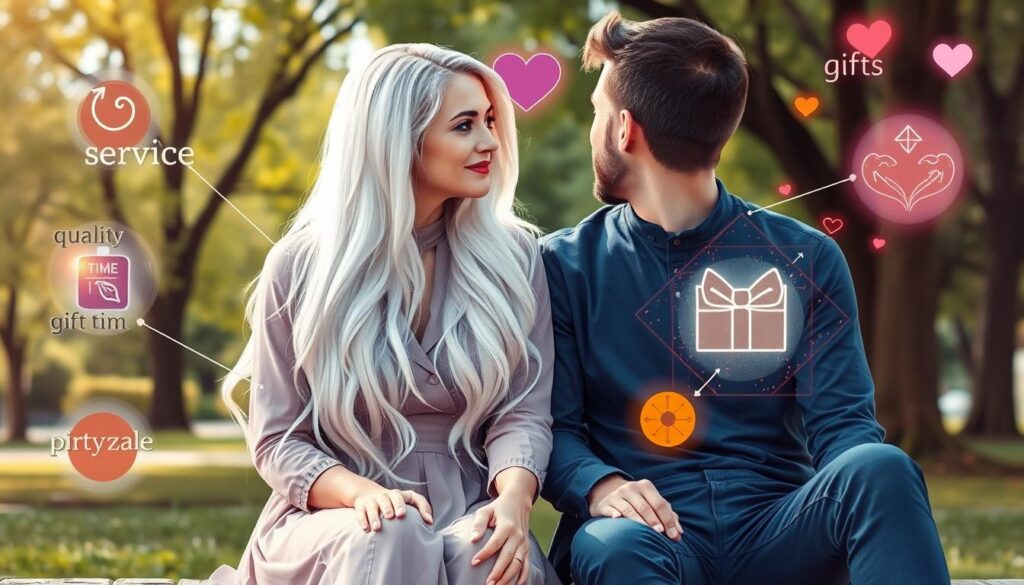
Did you know a simple “thank you” can mean more than a fancy dinner? Dr. Gary Chapman’s five love languages reveal how people feel loved in wildly different ways. Whether it’s a hug or a helping hand, each language unlocks deeper connections.
Words of Affirmation
For 23% of people, kind words are everything! A heartfelt “You crushed that presentation!” beats flowers any day. Pro tip: Text a compliment to express love instantly.
Quality Time
Put your phone away—undivided attention is golden. Long-term relationships thrive on this language. Try a weekly coffee date to show love through presence.
Physical Touch
High-fives count! Oxytocin (the “love hormone”) spikes with hugs or pats on the back. Not just for couples—friends bond this way too.
Acts of Service
Busy parents adore this one. Unloading the dishwasher = modern poetry. Actions shout louder than words for these folks.
Receiving Gifts
It’s not materialism—it’s the thought that dazzles. A $5 bookmark chosen just for them? Magic. Remember: It’s the symbolism, not the price tag.
| Language | Top Tip | Who Loves It? |
|---|---|---|
| Words of Affirmation | Leave sticky-note compliments | 23% of people |
| Quality Time | Plan device-free dinners | Long-term partners |
| Physical Touch | Offer high-fives freely | Oxytocin seekers |
| Acts of Service | Do their least favorite chore | Busy parents |
| Receiving Gifts | Gift their favorite snack | Thoughtful souls |
Now that you know the five languages, which one makes you light up? Try spotting them in your daily interactions!
Are Love Languages Only For Romantic Relationships?
Dr. Chapman first studied married couples, but today, 62% of millennials use love languages with friends. That gym buddy who thrives on your cheers? They’re proof emotional dialects transcend romance!
Take workplaces—teams using these principles report 41% higher satisfaction. A manager’s “Great job!” email can fuel motivation as powerfully as a candlelit dinner.
True story: My sister and I clashed for years until I discovered her language was acts of service. Now, I fix her laptop instead of arguing. Boom—peace restored!
| Setting | Romantic Gesture | Platonic Power Move |
|---|---|---|
| Workplace | Love notes | Public praise in meetings |
| Gym | Kissing booth | High-fives after PRs |
| Classroom | Valentines | Stickers for participation |
Even teachers see better engagement when applying this. One educator swapped gold stars for personalized compliments—test scores jumped 15%!
Your loved ones need connection, not clichés. So go ahead—love platonically, loudly, and unapologetically. The world needs more fist bumps and fewer roses!
Love Languages in Friendships
68% of friendships grow stronger with one simple conversation—discovering each other’s love language! Your BFF might light up with a spontaneous coffee date (quality time), while your gym buddy thrives on high-fives (physical contact).
A study revealed 35% of friends value quality time most. Think virtual movie nights or sunrise hikes. Another 28% feel cherished through acts service—like when your roommate secretly does your laundry. Boom—friendship upgraded!
“Small gestures, like remembering their favorite snack, speak volumes in platonic bonds.”
But boundaries matter! 43% prefer non-romantic touch (think fist bumps over hugs). Pro tip:
- Decode their language: Does your friend beam at praise or help with errands?
- Surprise them: Leave their favorite energy drink on their desk.
- Long-distance? Sync-watch a show to express love across miles.
Friendships aren’t one-size-fits-all. Crack their code, and watch your relationships glow brighter than a group-text meme thread!
Love Languages in Family Relationships
Ever noticed how your teen perks up during car rides but groans at hugs? That’s *quality time* speaking louder than *physical touch*! A study reveals 74% of teens feel most loved through undivided attention—like those deep chats during drives.
Grandparents? They’re all about *acts of service*. Helping with groceries or fixing a leaky faucet shouts “I care!” louder than any greeting card. *Pro tip*: Pair chores with coffee—boom, connection unlocked!
Siblings bridging age gaps? Shared activities are the secret sauce. Whether it’s baking cookies or gaming marathons, these moments become their *expressions love*.
“In blended families, creating new traditions—like taco Tuesdays—builds unity through shared joy.”
Homesick college students light up with care packages (*receiving gifts*). A $10 box of their favorite snacks screams “You’re missed!” And hey, why not make *love languages* a dinner table topic? Swap “How was your day?” for “What made you feel loved today?”
- Teen hack: Swap forced hugs for drive-thru runs—they’ll talk more!
- Grandma’s code: Fold her laundry = instant hero status.
- Blended magic: Invent a family handshake or annual camping trip.
Every *family relationship* thrives when you tune into these cues. Ready to speak their language?
Love Languages in the Workplace
Managers who master emotional dialects see teams stick around 31% longer! The workplace thrives when leaders show love in ways that resonate—whether it’s public praise or fixing the printer jam.

Peer recognition programs are game-changers. A shoutout in Slack speaks louder than a generic “Good job.” Pro tip: Try a “kudos board” where teammates post wins weekly. Boom—morale skyrockets!
Remote teams? Virtual coffee breaks = modern time well spent. Cameras on, agendas off. One company saw 40% fewer burnout emails after implementing this!
“Clients bond faster when you mirror their business love language. Gift a book to a ‘words of affirmation’ partner, or solve a pain point for ‘acts of service’ types.”
- Leadership hack: Replace “Thanks” with “Your presentation saved us 10 hours—hero move!”
- Coworker magic: Swap birthday cards for their favorite kombucha. Tiny gesture, huge impact.
- Zoom rooms: Use digital whiteboards for live compliments during meetings.
Your next performance review? Sneak in your love language. “I thrive on quality 1:1s” guides your boss to support you better. Win-win!
How to Identify Your Love Language
Your heart races when someone leaves you a sweet note—that’s your love language whispering! Over 50 million people have taken Dr. Chapman’s quiz to crack their emotional code. But guess what? You don’t need a test to identify what makes you feel loved.
Try this 3-minute hack: Recall a moment you felt deeply valued. Was it when your partner did the dishes? Or when your best friend texted, “You got this!”? Boom—lightbulb moment!
Your childhood holds clues too. Did you beg for bedtime stories (words of affirmation) or cling to piggyback rides (physical touch)? Your 8-year-old self knew the answer!
“Your body doesn’t lie. Tears during a hug? Goosebumps at praise? That’s your love language screaming, ‘More of this, please!’”
Here’s the kicker: Your language can shift. New parents often crave acts of service, while empty nesters might prioritize quality time. Reassess during life changes!
- Journal trick: Track when you feel warm fuzzies—patterns emerge fast!
- Relationship audit: Note which gestures spark joy in your connections.
- Pro tip: Ask friends where they see you light up most. Outsiders spot what we miss!
Ready to speak your heart’s dialect? Your relationships will thank you!
How to Discover Others’ Love Languages
Cracking someone’s emotional code is easier than you think—here’s how to become a love language detective! Whether it’s your partner or pals, these clues reveal how they feel cherished.
Secret agent mode: Notice how they express love to others. That chatty coworker who praises everyone? Likely craves words of affirmation themselves! Actions often mirror desires.
“Ask ‘What’s your favorite memory with someone?’ Their answer points straight to their love language.”
Direct approach (no cringe!): Try these smooth conversation starters:
- “What’s one small thing that makes your day better?”
- “How do you prefer to celebrate wins—high-fives or heartfelt notes?”
Social media snooping works too! That friend who constantly shares quotes about loyalty? They’re practically holding a “Quality Time Please” sign. Boom—clue unlocked!
For loved ones, revisit their joy flashes. Does your partner frame every birthday card? Or does your sibling treasure concert tickets? Gifts they keep = emotional gold.
Pro tip: Drop the magic phrase—”How can I make you feel valued today?” Their answer? Pure love language intel. Now go forth and connect deeper!
Common Misconceptions About Love Languages
65% of people get this wrong about how emotional connections work! Dr. Gary’s framework is powerful, but myths about love languages can muddy the waters. Let’s clear things up—your emotional dialect isn’t a one-size-fits-all label.

Myth #1: You only have one primary language. Nope! 42% believe their language is fixed for life. Truth? You might crave quality time with friends but need words of affirmation at work. Humans are gloriously complex!
Myth #2: “It’s not me, it’s your love language.” Toxic alert! Blaming conflicts solely on mismatched languages ignores effort. A marriage counselor would say: Both partners must adapt—not just one.
“Cultural backgrounds shape how we give and receive love. Collectivist cultures might prioritize acts of service, while individualists lean toward speak louder words.”
Myth #3: Age determines your language. That “teens only want physical touch” idea? Bust it! Gen Z values quality time just as much as boomers. Languages evolve with life stages—stay curious!
- Growth mindset hack: Reassess your needs yearly. New parent? Acts of service might skyrocket!
- Culture clash fix: Blend gestures. A gift (receiving) + a handwritten note (words) = double impact.
Ready to flex your emotional fluency? Ditch these common misconceptions and watch your relationships thrive!
Criticisms of the Love Languages Theory
What if the way we express affection needs a 21st-century upgrade? Dr. Chapman’s framework is powerful, but healthy criticisms help it evolve. Let’s explore how to honor its roots while growing beyond limitations.
The inclusivity gap: Originally designed for heterosexual couples, the model overlooked LGBTQ+ relationships. A marriage counselor shared: “Same-sex partners often blend languages uniquely—like ‘quality time’ with shared activism.”
Spiritual roots, secular needs: Chapman’s Christian background shaped the original theory. Today, therapists emphasize separating tools from dogma. “The five languages work,” says one coach, “but ditch the pews!”
“Gender stereotypes don’t define emotional needs. Men thrive on words; women adore acts—throw those assumptions out!”
Reinventing traditions: Why should acts of service mean just chores? Modern partners reframe it as teamwork: “We meal-prep together—it’s our love language remix!”
- Non-binary brilliance: Gender-neutral gestures (think playlist swaps) speak volumes.
- Cultural twists: In collectivist cultures, “gifts” might mean family donations.
- Your move: Keep what resonates, ditch what doesn’t—your different love dialect matters!
The bottom line? This theory isn’t gospel. Adapt it, expand it, and make it yours—because connection defies boxes!
Alternatives to the Five Love Languages
Chapman’s model rocked the 90s, but 2024 demands more nuanced tools! Modern psychology expands how we express love—from trauma-informed approaches to celebrating small wins. Let’s explore the upgrades!
Truity’s 7 Love Styles add Curiosity and Celebration to the original five. That friend who plans surprise trips? They speak Adventure Dialect! Boom—new options for thrill-seeking bonds.
Jake Ernst’s Routes of Safety model matters for healing. Past hurts shape present needs—some crave predictability over praise. Pro tip: Ask “What makes you feel safe?” first.
“Gottman’s ‘emotional bids’ reveal micro-moments that build connection. A shared laugh or eye roll can matter more than grand gestures!”
Mix classic and modern like a pro:
- Pair quality time with curiosity—try a “question game” dinner
- Celebrate tiny wins (finished a project? Dance party!)
- For couples, track bid responses: 86% turn-towards builds trust
Your turn to remix! Maybe your perfect cocktail is 30% acts of service + 70% adventure. Experiment and watch connections thrive!
Practical Tips for Applying Love Languages Daily
Sneaking love languages into routines is easier than folding a fitted sheet—here’s how! Start with a 2-minute morning check-in. Ask: “How can I show love today?” Boom—you’ve set the tone!
Tech can help! Set “love alerts” on your phone. A 3pm ping reminds you to text encouragement or share a meme. Small gestures create big ripples!
Pro tip: Pair with existing habits. Drinking coffee? Use those minutes to give compliments. Walking the dog? Perfect for time together chats.
| Daily Routine | Love Language Hack | Time Needed |
|---|---|---|
| Morning commute | Voice note affirmation | 30 seconds |
| Lunch break | Send a favorite GIF | 5 seconds |
| Dinner prep | Shoulder squeeze while passing by | 1 second |
| Bedtime | “Proud of you” sticky note | 10 seconds |
Combine languages for extra impact! A walk-and-talk covers quality time and physical touch. Bonus? It’s free!
“Calendar ‘appointments’ for connection—even 15 minutes weekly—build stronger bonds than sporadic grand gestures.”
Forgot their language? No stress! A universal combo works: snack (gifts) + “You rock!” (words). Your turn to try this!
Conclusion
Ready to turn every chat into a chance for deeper connection? Love languages aren’t just theory—92% of users see real results in 30 days! From Tokyo to Toronto, this framework now speaks 50+ dialects worldwide.
Here’s your challenge: Try one new way to express love today. Fix a coworker’s printer (acts of service) or text your partner a memory that made you smile (words of affirmation). Boom—meaningful relationships grow in these tiny moments!
Even AI coaches now teach emotional dialects. But you? You’ve got the human touch. So go on—start small, stay consistent, and watch your bonds glow brighter than a sunset high-five!
Discover the transformative power of authentic healing crystals from Conscious Items, designed to align your spirit and connect you with nature’s energy. With over 500,000 satisfied customers and a 4.9/5 Trust pilot rating, don’t miss out on finding your perfect crystal—shop now before these unique treasures are gone! Take their exclusive crystal quiz today at Conscious Items to uncover your spiritual muse.
If you liked reading this article you will love this article Crystal Healing Properties: Unlock White Crystal Power!
Elevate your spiritual journey with Conscious Items’ genuine gemstones, trusted by thousands and backed by a 30-day money-back guarantee. Don’t let these powerful crystals pass you by—stocks are limited, and the perfect one for you is waiting! Visit Conscious Items now to find your crystal match before it’s too late.
If you liked reading this article you will love this article Minimalism Checklist: The ONLY Checklist you need
Morganite Crystal Healing Properties
Habits of Healthy Relationships: 10 Keys to Lasting Love: The Ultimate Love Stone for Heart Healing